Last checked: November 20, 2026
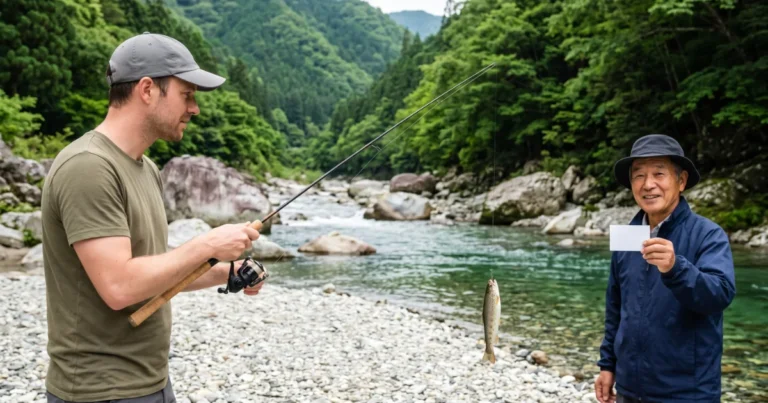
Staying in Hiroshima with a rod in your bag? Read this before you fish a river, a lake or a dam lake anywhere in Chugoku.
You don’t need a national license to fish Chugoku’s rivers and lakes with a rod. But many rivers and lakes sell day tickets through a local fishing co-op. Each prefecture sets its own seasons and size limits, and the rules on putting a bass back differ a lot. We cover rivers, lakes and dam lakes in Yamaguchi, Hiroshima, Okayama, Tottori and Shimane. For the sea, see our guide to Chugoku sea fishing rules.
We built this guide from prefecture regulations, committee instructions, co-op rules and dam managers’ papers. We say so when we couldn’t confirm something. Dates and prices change every year, so treat the numbers here as a guide.
At a Glance
- National license: None for rod fishing in rivers and lakes
- Day ticket: Needed for the co-op’s fish where a co-op holds fishing rights, in all five prefectures. Lake Shinji is the one big lake where Shimane says no ticket is needed (but no clams)
- Trolling: Visitors can’t troll on any river or lake here (national rule for foreign nationals)
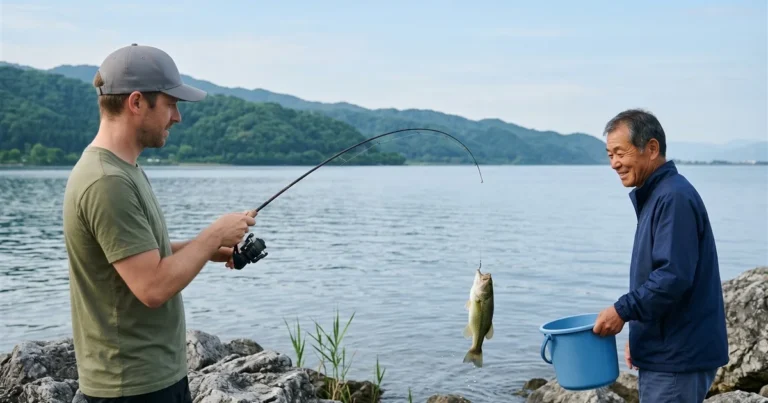
- Bass and bluegill: Can’t go back anywhere in Tottori, in Hiroshima’s Gōno River system or at Lake Okutsu. Obara Dam bans carrying them out alive. We found no prefecture ban elsewhere
- Stream trout: Closed from September 1 (Yamaguchi, Hiroshima, Okayama, Shimane) or October 1 (Tottori) to the end of February
- Fines: Up to six months in prison or ¥100,000 for most rule breaks, up to ¥1,000,000 if fishing a co-op’s species without a ticket is treated as infringing its fishing right
Who This Guide Is For
- You’re staying in Hiroshima, Okayama, Matsue or Tottori and want to fish a river, a lake or a dam lake
- You plan to use a rod or a handline. We leave out nets and other gear
- You want trout in a mountain stream, ayu (sweetfish) in a river, Japanese smelt (wakasagi) in winter, or bass in a dam lake
- You want the sea instead? Our sea rules guide covers it, including Lake Nakaumi (中海), which counts as sea here
- Fishing ponds and put-and-take fishing parks aren’t covered
Do You Need a License or a Ticket?
You don’t need a national license. Japan has none for rod fishing. Our guide to fishing licenses in Japan has the full picture.
Rivers and lakes with a fishing right are different. A local co-op holds the right, and you buy its day ticket to fish its species. Yamaguchi’s FAQ, Okayama’s river guide and the Shimane Prefecture website all say so. Hiroshima’s and Tottori’s rules say the same. The ticket belongs in your pocket while you fish, and you show it when a river monitor asks. If you break the co-op’s rules, the co-op can end your fishing, refuse you later and keep your fee.
Bass and bluegill are not co-op species in any of the five prefectures. The rules we found don’t say whether you need a ticket to fish only for bass. They also don’t say whether a co-op’s method rules apply when you target bass. They don’t say “no” either. We couldn’t confirm it, so if bass is your only target, ask the co-op before you cast.
Some lakes aren’t inside a co-op’s fishing-right area at all, such as Toyota Lake (豊田湖) and Ōhara Lake (大原湖) in Yamaguchi. Only Shimane has said in so many words that you can fish a lake without a ticket, and that’s Lake Shinji. We couldn’t find a prefecture sentence for the others. We don’t call them free, and the lake section lists what we found for each.
Our pick: buy your ticket before you reach the water. Many co-ops charge more at the river, as the next section shows.
Where to Buy a Day Ticket
Some co-ops sell tickets online, and the list changes, so search your river on FISHPASS and Tsurichike too. We couldn’t confirm that either works with an overseas phone number or has English support.
| Prefecture | Where | How to buy |
|---|---|---|
| Yamaguchi | 玖北 co-op | Online (FISH PASS) |
| Yamaguchi | 佐波川 and 椹野川 | Online (an online system the co-op designates; the rules don’t name it) |
| Yamaguchi | 粟野川 | Lawson (豊北町滝部店) |
| Yamaguchi | Other rivers | Tackle shops |
| Hiroshima | 江の川 (Gōno River) and 西城川 | Online (ten co-ops’ rules mention an online system) |
| Hiroshima | 木野川 | FamilyMart (津田) |
| Hiroshima | Other rivers | Tackle shops, stores and roadside stations |
| Okayama | 旭川中央, 新見, 児島湾淡水 and 旭川北 (Hiruzen) | Online |
| Okayama | 湯原 | Co-op office only (closed Thursdays). No online sales |
| Okayama | Other co-ops | Co-op offices and shops |
| Tottori | 千代川 | Online (Tsurichike), FamilyMart at Michi-no-Eki Kawahara, roadside stations, tackle shops |
| Tottori | 天神川 | Online, or 16 shops |
| Tottori | 日野川 | Online (FISHPASS) |
| Shimane | 斐伊川, 神戸川, 江川, 八戸川, 周布川, 三隅川 and 高津川 | Online, or tackle shops and stores |
| Shimane | 神西湖 | Co-op office or its designated outlets |
Source: Co-op rules and websites, and the FISHPASS dealer list, checked November 2026. 湖山池 and 東郷池 in Tottori sell only at the co-op office.
Paying at the river costs more at many co-ops. We’d buy ahead.
| Prefecture | Extra if you pay a monitor on site |
|---|---|
| Yamaguchi | +¥100 to +¥1,000, depending on the river (¥1,000 on the 錦川) |
| Hiroshima | +¥500 at most co-ops (+¥300 in a few) |
| Okayama | +¥1,000 at 新見. 児島湾淡水 takes payment from a monitor with no surcharge listed |
| Tottori | Double price at the 千代川 and 天神川 (the co-ops’ price lists) |
| Shimane | +¥500 at most co-ops, +¥1,000 on the 高津川 |
Source: Each co-op’s rules and price list, checked November 2026.
Children often fish free or at a discount, and women get half price at some co-ops. The 江の川 (Hiroshima) and Haizuka Dam take under-18s free, the 佐波川 takes 18 and under, and 太田川 gives half price to women. Yearly tickets on the 千代川, 日野川, 八戸川 and 高津川 carry your photo.

If I buy a ticket online, can I just show it on my phone?

Not at every co-op. The 千代川 co-op wants the ticket printed in color and carried in a case, plus its fishing map printed, and the 天神川 co-op also says to print first. The 高津川 co-op says to wear a printed ticket or carry the data.
What You Can and Can’t Do, Prefecture by Prefecture
Trolling comes first: visitors can’t do it on any river or lake in these five prefectures. Japan lets foreign nationals troll only in three notified sea areas, and none is in Chugoku. The rule covers inland water too. It concerns foreign nationals, and permanent residents are treated differently.
The first table covers boats, lights and snagging.
| Prefecture | Water | Rule |
|---|---|---|
| Yamaguchi | 宮野湖 | Boats: no boat fishing above the dam wall. Other lakes: nothing in the rules we found |
| Yamaguchi | 椹野川 | Night-light fishing banned. No snagging except for ayu |
| Yamaguchi | 吉田川 co-op’s waters (木屋川 system) | Night-light fishing banned |
| Hiroshima | 太田川, 江の川 and Haizuka Dam | Boats: banned |
| Hiroshima | Haji Dam | Boats: only in the dam-lake stretch |
| Hiroshima | Hattabara Dam | Boats: no engine boats |
| Hiroshima | 福山市 Ashida River | Boats: fishing for funa or unagi from a boat takes a ¥1,200 day ticket, against ¥600 from the bank |
| Hiroshima | 弥栄湖 | Lights: no fishing with electric light at night |
| Hiroshima | 東城川 | Lights: no underwater lights from sunset to sunrise |
| Okayama | Yubara | Boats: cost extra |
| Okayama | 旭川湖 | Boats: no powerboat methods |
| Okayama | Okutsu | Boats: notify first (April 1 – November 15). Fishing from sunrise to sunset |
| Okayama | Niimi | Boats for smelt cost extra. No fishing with a viewing box lit by headlamps or other lights at night |
| Tottori | Lake Koyama and Togo Pond | Boats: banned. No snagging |
| Tottori | 千代川 and 日野川 | Boats: river-boat fees |
| Tottori | 千代川 | Snagging banned June 1–14 |
| Tottori | All waters | Underwater lighting methods banned |
| Shimane | 斐伊川 | Boats: +¥3,000 a year |
| Shimane | 江川 | Boats: only on the Hamabara dam lake, +¥1,000 a year |
| Shimane | 八戸川 | Boats: banned |
| Shimane | Mibu and Onagami | Boats: notice and rules |
| Shimane | Inland waters | Fishing methods using lights of 100 W or more are banned |
Source: Prefecture rules and co-op rules, checked November 2026. We found no snagging rule for Hiroshima’s rivers and lakes or for Okayama and Shimane.
The second table covers bass, clams and carp.
| Prefecture | Subject | Rule |
|---|---|---|
| Yamaguchi | Putting bass and bluegill back | No ban found |
| Yamaguchi | Shijimi clams | No taking on 椹野川, 厚狭川 and 木屋川 |
| Yamaguchi | Carp | Can’t be carried out of 13 waters |
| Hiroshima | Putting bass and bluegill back | Banned in the Gōno River system |
| Hiroshima | Shijimi clams | We found no clam rule |
| Hiroshima | Carp | Can’t be carried out of three river systems |
| Okayama | Putting bass and bluegill back | No prefecture ban. Banned at Lake Okutsu |
| Okayama | Shijimi clams | No clam rule found |
| Okayama | Carp | No carp rule found |
| Tottori | Putting bass and bluegill back | Banned everywhere |
| Tottori | Shijimi clams | No clams at Lake Koyama and Togo Pond |
| Tottori | Carp | Can’t be released, though putting one straight back is fine |
| Shimane | Putting bass and bluegill back | No prefecture ban. Obara Dam bans bringing them in and carrying them out alive |
| Shimane | Shijimi clams | No clams at Shinji, 神戸川 and Jinzai |
| Shimane | Carp | Can’t be carried out of some river systems, though releasing one on the spot is fine |
Source: Prefecture rules, committee instructions and dam managers’ papers, checked November 2026. Sea-only rules (chum from boats, fish-attracting lights, abalone, sea cucumber, octopus) are in our sea rules guide.
Seasons: When Each Fish Opens and Closes
This table shows when each prefecture’s regulation closes ayu and stream trout. A co-op sets its real season each year, and it can be shorter.
| Prefecture | Ayu closed | Stream trout closed |
|---|---|---|
| Yamaguchi | January 1 – May 19 | September 1 – end of February |
| Hiroshima | January 1 – May 19 | September 1 – end of February |
| Okayama | January 1 – May 31 | September 1 – end of February |
| Tottori | February 1 – May 31 | October 1 – end of February |
| Shimane | January 1 – May 19 | September 1 – end of February |
Source: Prefecture fisheries regulations, checked November 2026. Stream trout means amago, yamame and iwana (whitespotted char). Yamaguchi and Okayama cover all trout except rainbow trout. Tottori and Shimane add rainbow trout. Shimane counts gogi (a local form of whitespotted char) with iwana.
These exceptions matter:
- Yamaguchi: Ayu are also closed September 20 to October 31 on set stretches of 14 rivers
- Hiroshima: Parts of the 小瀬川, 太田川 and 沼田川 have autumn ayu closures. Part of the 帝釈川 is closed to all fish from October 1 to March 31
- Tottori: Ayu are also closed from September 26 to October 31. The 千代川, 天神川 and 日野川 let each co-op set ayu periods between November 1 and January 31
- Shimane: The 益田川 (昭和橋 to 雪舟橋) closes ayu October 6 to November 30. The 田儀川 and 小田川 close May 20 to June 20, except for rod and handline
Salmon is closed all year in Yamaguchi, Tottori and Shimane. Hiroshima and Okayama have no salmon rule in their regulations.
The table is the regulation. Co-ops open each river on their own dates. Here are 2026 opening days for a few.
| Co-op (river) | Stream trout opened | Ayu opened |
|---|---|---|
| 千代川 (Tottori) | March 1 | June 1 |
| 日野川 (Tottori) | March 1 | June 1 |
| 斐伊川 (Shimane) | March 1 | July 1, noon |
| 三隅川 (Shimane) | March 1 | June 1 |
| 旭川中央 (Okayama) | – | June 1, 6:00 (rods) |
| 太田川 (Hiroshima) | – | June 1 (decoy fishing) |
| 江の川 (Hiroshima) | – | May 20 |
Source: Co-op and federation notices, checked November 2026. We couldn’t find 2026 dates for Yamaguchi or for the 高津川. Hiroshima’s trout open on March 1 or April 1, depending on the co-op.
If you’re traveling in spring, we’d pick stream trout over ayu. In these examples trout opened on March 1, while ayu opened between May 20 and July 1.
Is ayu season over once autumn comes?
Not on Tottori’s 日野川, whose co-op says ayu fishing reopens at noon on November 1, with some closed areas. The 天神川 map closes ayu from September 26 to the end of May, and so does the 千代川 price list, except in the Chizu and Wakasa districts, where it lists September 26 to October 31. Check with the co-op before you plan a winter ayu trip.
Eels have winter orders too. From October 1, 2026 to March 31, 2027, Hiroshima bars Japanese eel (unagi) over 30 cm in its inland waters. Its rule already bars those at 30 cm or under. So there’s no eel this winter in Hiroshima’s rivers and lakes, apart from below Ibara Bridge on the 小瀬川. Shimane’s order runs until March 31, 2029 and bars eels over 30 cm from November 1 to March 31. Lake Shinji’s dates are January 1 to March 31, and Lake Jinzai’s December 1 to March 31.
For a rough year, here is how the months go:
- January – February: Trout and ayu are closed in all five prefectures. Smelt season runs at Shinryu (神竜湖, from December 1) and at 東郷池 (from October 1)
- March: Trout open at many co-ops, on March 1 or April 1
- April – May: Lake Okutsu’s lake use starts on April 1. Smelt close at Lake Shinji and Lake Jinzai on April 1 (until October 14). Ayu open on the 佐波川 (May 25) and on Hiroshima’s 江の川 (May 20)
- June: Most ayu open on June 1
- July – August: The 斐伊川 opens ayu on July 1, and trout end on August 31 at many co-ops
- September – October: The trout ban begins, and Tottori’s rivers close to ayu on September 26. Smelt reopen at Lake Shinji and Lake Jinzai on October 15
- November – December: Okutsu’s lake season ends on November 15. Shinryu smelt open December 1
Size Limits
This table shows the length at which a fish can’t be taken. “At or under” means a 15 cm fish must go back if the limit is 15.
| Prefecture | Stream trout, at or under | Unagi, at or under |
|---|---|---|
| Yamaguchi | 15 cm | 20 cm |
| Hiroshima | 15 cm | 30 cm |
| Okayama | 15 cm | 20 cm |
| Tottori | 15 cm | 30 cm |
| Shimane | 15 cm for yamame, amago and rainbow trout. 18 cm for gogi and iwana | 30 cm, all year |
Source: Prefecture fisheries regulations, checked November 2026.
Common carp (koi, コイ) of 15 cm or less can’t be taken in Hiroshima, Okayama, Tottori and Shimane. Yamaguchi’s limit is 20 cm. Funa (crucian carp) has limits of 6 cm in Hiroshima, 10 cm in Tottori (three river systems) and 5 cm in Shimane.
Co-op rules can be stricter. The 錦川 co-op bars carp of 25 cm or less, unagi of 30 cm or less and funa of 15 cm or less. The 阿武川 co-op bars trout of 20 cm or less. At Jinzai (神西湖), carp of 18 cm and funa of 10 cm or less are off limits.
Our pick: release any stream trout of 15 cm or less, and gogi and iwana of 18 cm or less in Shimane. Some co-ops set a higher line, such as 20 cm on the 阿武川.
Lakes and Dam Lakes, Lake by Lake
Here we list what we found for each lake: the co-op and its ticket, boats, fishing method, and bass. A lake we couldn’t find a rule for is named as such. We put the lakes most visitors can reach on cards and the rest in a table for each prefecture. Prices are rod prices from the rules, checked in November 2026.
Yamaguchi
We list every lake we found so you can match your spot.
| Lake (dam) | Ticket | Other rules |
|---|---|---|
| 菅野湖 (菅野ダム, Shunan) | 三須 co-op. Ayu ¥2,000 a day. Unagi, crab and trout: free but need co-op approval | Ayu from the date the co-op announces. Trout March 1 – August 31 |
| 向道湖 (向道ダム, Shunan) | 錦川上流 co-op. Rod ¥1,000 a day for unagi, koi, haya (small river fish; the 可愛川 co-op’s rules list freshwater minnow and dark chub) and trout. Junior high and under free | We found no other rules |
| 宮野湖 (荒谷ダム, Yamaguchi) | 椹野川 co-op. Ayu and trout ¥1,500 a day. Other fish ¥500 by a rod without a reel, ¥1,500 with a reel. Elementary school and under fish free by rod. +¥200 on site | Boat fishing above the dam wall is closed all year. No night-light fishing |
| 山の口ダム湖 (Hagi) | 大井川 co-op | Co-op rules ban taking the co-op’s species above the dam wall all year |
| 阿武湖 (阿武川ダム, Hagi) | 阿武川 co-op. Day ¥1,000 for other fish. Junior high and under free. +¥300 on site | Ayu rod without reel from June 1, with reel from July 1. Trout March 1 – August 31. Carp can’t be carried out |
| 歌野川ダム (Shimonoseki) | 吉田川 co-op. Ayu and trout ¥600 a day. +¥300 on site | Trout March 1 – August 31. Night lamps banned |
| 新湯ノ原ダム (Shimonoseki) | 吉田川 co-op | No fishing within 100 m below the dam wall’s base, all year |
| 豊田湖 (木屋川ダム, Shimonoseki) | Outside the co-op’s area | The city’s park page lists a fishing pier and smelt fishing from December to mid-March. We couldn’t find its fee or rules |
| 大原湖 (佐波川ダム, Yamaguchi) | Outside the co-op’s area | We couldn’t find how fishing is handled |
| 小野湖 (厚東川ダム, Ube) | No co-op right | We couldn’t find how fishing is handled. A city report calls its smelt fishing famous |
| 島地川ダム湖, 一の坂ダム | Outside the co-op’s area | We couldn’t find rules |
Source: Yamaguchi co-op rules (15 PDFs) and fishing-ground plans, checked November 2026. We couldn’t find rules from the lakes’ managers for boats or night fishing. Smelt isn’t a co-op species in Yamaguchi. We also couldn’t find rules for 宇部丸山ダム and 生見川ダム, or for the small dams on the 掛淵川.
Lake Yasaka (弥栄湖) on the Yamaguchi–Hiroshima line belongs to Hiroshima’s licensing, so it’s in the next section.
Hiroshima
If you want bass, know that Haji Dam and Haizuka Dam both sit in the Gōno River system. Bass, smallmouth bass and bluegill caught in that system’s public waters can’t be put back in the water you took them from. A committee instruction sets this from January 1, 2026 to December 31, 2028. The prefecture says it doesn’t forbid the fishing itself and asks anglers to take catches home.
Haji Dam, Yachiyo Lake (土師ダム・八千代湖, Akitakata)
The 可愛川 co-op charges ¥1,400 a day for koi and unagi, ¥900 for funa, and ¥500 for haya. Children through junior high school fish free for koi, funa and haya. Paying on site adds ¥500. Boats are banned except in the dam-lake stretch the rules call 八千代湖堰堤 to ふれあい大橋. Bass can’t go back. We couldn’t find the dam manager’s boat rules (Haji Dam office: 0826-52-2455).
Haizuka Dam, Haizuka Lake (灰塚ダム・ハイヅカ湖, Miyoshi)
The 江の川 co-op charges ¥300 for a funa or haya rod ticket (a two-day ticket in the rules), ¥1,500 for trout, unagi and koi, and ¥2,500 for ayu. Under-18s fish free, and tickets sell online. Boats are banned. The dam wall’s upstream 1,000 m and a wetland at Chiwa (知和) are closed to all gear. Bass can’t go back.
Hattabara Dam, Ashida Lake (八田原ダム・芦田湖, Sera and Fuchu)
The 芦田川上流 co-op charges ¥800 a day for unagi and funa, and ¥2,000 for ayu. Preschool and elementary children fish free. Paying on site adds ¥500. The dam’s manager bans engine boats and asks everyone on a canoe, kayak or boat to wear a life jacket. The co-op’s ticket notes limit fishing on the dam lake to rods and handlines. Bass aren’t covered by Hiroshima’s ban, but the manager asks you not to bring in invasive species.
Shinryu Lake (神竜湖, Taishakukyo, Shobara)
The 帝釈峡 co-op charges ¥500 a day for smelt by rod or handline, and ¥1,000 for koi and funa. Smelt season runs December 1 to May 31. Each angler can use up to three rods or handlines for smelt, koi and funa. Fishing other than rod and handline is banned from January 1 to April 14. We couldn’t find a boat rule.
Source: Hiroshima co-op rules (24 PDFs) and the dam managers’ pages, checked November 2026. The prefecture’s top page lists the rules. The 2026 bass order is its committee instruction no. 3.
These Hiroshima lakes have fewer rules we could find.
| Lake | Ticket | Other rules |
|---|---|---|
| 三川ダム (Sera) | 芦田川上流 co-op, same fees as Hattabara | Rod and handline only |
| 椋梨ダム・白竜湖 (Mihara) | 沼田川 co-op. Koi and unagi ¥700 a day. Funa ¥700. Preschool children free. Elementary and junior high pay half for koi and unagi; for funa, elementary children are free. +¥500 on site | From the upstream side of 中央大橋, only rod fishing is allowed. Below it, rules differ by zone |
| 福富ダム (Higashihiroshima) | 沼田川 co-op | All gear banned from the net line to the dam wall |
| 弥栄湖 (Otake, Iwakuni) | 芸防 co-op (office in Iwakuni, Yamaguchi). Koi and funa ¥300 a day. Preschool and elementary free. Online sales. +¥500 on site | No fishing with electric light at night. Trout 15 cm, koi 20 cm, funa 6 cm, unagi 30 cm or under can’t be taken |
| 温井ダム・龍姫湖 (Akiota) | We couldn’t confirm the lake is in a co-op’s area | The dam manager’s Q&A has no fishing rules |
We couldn’t find rules for: 野呂川ダム, 樽床ダム (聖湖), 王泊ダム, 立岩ダム. We also couldn’t find the dam managers’ boat and kayak rules for Haji, Shinryu, Haizuka, Yasaka and Nukui, or the prefecture-run dams’ lake-use rules.
Okayama
Lake Yubara (湯原湖, Maniwa)
The 湯原 co-op’s second-class ticket (rod, koi, amago, unagi, rainbow trout) is ¥2,400 a day before tax. It’s about ¥2,640 with tax, on the co-op’s page. Junior high pays half, elementary a quarter. You buy at the co-op office (closed Thursdays), the Yubara tourist information center (closed Tuesdays) or a local shop. The rainbow trout fishing park listed as an outlet is closed for now. We found no online sales. Boats inside the Yubara first dam cost ¥1,500 more a day. Amago and rainbow trout run March 1 to August 31, with no season limit on rainbow trout inside the lake. Amago and unagi have size limits. The lake’s managers’ own rules weren’t found.
Lake Okutsu (奥津湖, Tomata Dam, Kagamino)
The lake’s rules (revised September 2025, set by the Lake Okutsu users’ council) allow fishing from sunrise to sunset, with bait only and no lures. Lake use runs April 1 to November 15 (it can end earlier in the year if migrating birds arrive). Bass, smallmouth bass and bluegill can’t be brought in, taken out or put back, and a catch must be disposed of. Canoes, kayaks, SUPs and rowboats need a notice, and engine boats need approval beforehand. The 久田川 co-op’s area covers it, but we couldn’t find its rules, price or where to buy a ticket.
Source: 湯原 co-op, the Lake Okutsu users’ council rules and the Tomata Dam office, checked November 2026. Fishing is “no notice needed” at Okutsu.
| Lake | Ticket | Other rules |
|---|---|---|
| 旭川湖 (旭川ダム, Okayama and Maniwa) | 旭川中央 co-op. Second class ¥1,500 a day, third class ¥500 (before tax). 22 outlets and FISHPASS | Methods using powerboats are banned. Ayu from June 1, trout March 1 – August 31 |
| 児島湖 and 第七貯水池 | 児島湾淡水 co-op. Rod ¥100 a day, ¥1,000 a year. Children and disabled anglers free, no application. Monitors take payment. FishPass sells day tickets | No bottom-stirring. Koi 15 cm and unagi 20 cm or under can’t be taken. Boats: not in the rules for the lake. We found no lake-manager rules |
| 河本ダム・小坂部ダム (Niimi) | 新見 co-op. Smelt third-class ticket ¥700 a day (before tax). A boat for smelt fishing adds ¥1,000 | The co-op’s rules ban fishing with a viewing box lit by headlamps or other lights at night. Smelt rods are allowed even in the zone closed from November 1 |
| 恩原湖 (Kagamino) | 奥津川 co-op | We couldn’t find its rules or price |
| 新成羽川ダム (Takahashi) | 成羽川 co-op (koi, funa) | Stay off the water within 1,000 m upstream of the dam wall. We couldn’t find a day ticket |
| 黒鳥調整池 (成羽川) | 成羽川 co-op | Stay off the area around the Tahara power plant’s outlet |
| 千屋ダム (Niimi) | We couldn’t confirm | We couldn’t find rules |
We couldn’t find the lake managers’ rules for Yubara, Asahigawa and Kawamoto. 鬼ヶ岳ダム and 高瀬川ダム sit outside co-op areas, and we found no fishing rules for them. For rivers, we couldn’t read many Okayama co-ops’ rules.
Tottori
Lake Koyama (湖山池, Tottori)
The 湖山池 co-op charges ¥1,000 a day or ¥10,000 a year, and you can only pay at its office in Tottori (湖山町南1-969-5). Tottori city residents fish free. Boats and rafts are banned. Only rods and handlines are allowed, and snagging, lures and chum (amiko) are banned. Koi and funa are closed May 15 to July 15. Clams can’t be taken. If you fish without paying, you owe ¥10,000 on top of the fee. Bass can’t go back, as in all of Tottori. The rules don’t say whether the lure ban covers bass fishing.
東郷池 (Togo Pond, Yurihama)
The 東郷湖 co-op charges ¥1,000 a day or ¥3,000 a year at its office in Yurihama (上浅津123-20). Residents of Yurihama and Misasa, children through junior high and over-70s don’t need approval. Boats and rafts are banned. Rods, handlines, dip nets and hands are allowed, and the rules don’t ban lures or chum. Smelt run October 1 to April 30. Clams can’t be taken. Fishing without approval costs 1.5 times the fee.
Source: Tottori co-op rules for Koyama and Togo, checked November 2026. The prefecture’s top page lists the rules. Tottori’s bass rule is in its committee notice no. 7, in place since November 2007, and with no end date since November 2012.
| Dam lake | Ticket | Other rules |
|---|---|---|
| 中津ダム (Misasa, 小鹿川) | 天神川 co-op area | Fishing is banned above the weir the co-op’s rules call 小鹿えん堤. We matched it to Nakatsu Dam by location, and no source names both |
| 賀祥ダム (緑水湖, Nanbu) | We couldn’t confirm the 日野川 co-op’s area includes it | We couldn’t find fishing rules |
| 殿ダム (Tottori, 袋川) | We couldn’t confirm the 千代川 co-op’s area includes it | We couldn’t find fishing rules |
We couldn’t find rules for 菅沢ダム, 佐治川ダム, 百谷ダム or 東郷ダム.
Shimane
Lake Shinji (宍道湖, Matsue and Izumo)
Shimane says no ticket is needed on Lake Shinji’s co-op waters, as the co-op has no fishing rules. You can’t take shijimi clams. The 宍道湖 co-op says it puts no restrictions on catching its species by rod or dip net. It asks you not to fish in the shipping channel or from bridges because it’s dangerous. Smelt are closed April 1 to October 14, and shirauo (whitebait) June 1 to November 14. Unagi over 30 cm are closed January 1 to March 31, and 30 cm or under all year. We couldn’t find rules for boats, kayaks or night fishing, apart from the prefecture’s ban on 100 W lights in inland waters.
Mibu Dam, Miyabi Lake (御部ダム・みやび湖, Hamada)
You can fish from the bank or from a boat you bring. File a lake-use notice at the Mibu Dam office first. Everyone aboard needs a life jacket, and boats can’t use engines (paddle, pedal and electric outboards are fine). Swimming is banned, and use is allowed until sunset. The prefecture says some species may need a ticket from the 三隅川 co-op.
Obara Dam, Lake Sakura-Orochi (尾原ダム・さくらおろち湖, Unnan and Okuizumo)
The manager’s 2013 guide bans engine boats unless it permits them (electric and paddle are fine) and asks you to wear a life jacket aboard. Take your line, hooks, lures and bait home. Watch for falls when you fish from the bank. Don’t bring in bass, bluegill or other invasive species, and don’t carry them out alive. The guide doesn’t say whether the lake is in the 斐伊川 co-op’s area. The co-op’s day ticket for unagi, koi, ugui (big-scaled redfin) and funa is ¥800.
If you want a lake with no ticket to buy, we’d pick Lake Shinji. Shimane says no ticket is needed there, which no other lake here can claim.
Source: Shimane Prefecture website, inland waters page, the Lake Shinji co-op, the Hamada office’s Mibu Dam notice and the Obara Dam guide (2013 edition), checked November 2026.
Can I fish Lake Sakura-Orochi after dark?
The manager’s 2013 guide limits lake use to 9:00–17:00 but says fishing falls outside that limit, and it expects night unagi fishing. Shimane still bars unagi of 30 cm or under all year, and bigger ones from November 1 to March 31. Check the eel season first (see Seasons).
| Lake | Ticket | Other rules |
|---|---|---|
| 神西湖 (Izumo) | 神西湖 co-op. Rod ¥500 a day, ¥7,000 a year. Children and disabled anglers free. Buy at its office or designated outlets. No online sales or on-site payment found | Rods and cast nets only. Wear the co-op’s fishing cap. Koi 18 cm, funa 10 cm or under can’t be taken. No clams |
| 来島貯水池 (Iinan) | 神戸川 co-op. Day ¥1,500, year ¥7,000. +¥500 on site. FISHPASS | We found no dam-only rules |
| 八戸川貯水池 (八戸ダム, Gotsu) | 八戸川 co-op. Koi, funa, ugui ¥400 a day. High school and under free. FISHPASS | No boats for any method |
| 青尾貯水池 (Hamada) | 周布川 co-op. Ayu, unagi, trout ¥2,000 a day. FISHPASS | We found no dam-only rules |
| 浜原ダム湖 (Misato) | 江川 co-op. Trout and other fish ¥1,000 a day. Junior high and under free. +¥500 on site | Boats allowed only on the dam-lake stretch, with ¥1,000 a year extra. The co-op asks you not to release bass (a request, not a rule) |
| 大長見ダム・紅葉湖 (Hamada) | We found no ticket rule | File a notice with the Hamada office. Rowing or pedal boats only. No use after sunset. We found no fishing rules |
| 坂根ダム (Okuizumo) | 斐伊川 co-op bans all methods above it | Co-op’s closed area |
We couldn’t find rules for 志津見ダム, 山佐ダム, 布部ダム, 千本ダム, 浜田ダム or 三瓶ダム. The prefecture’s Hamada office lists Mibu and Onagami as its dam lakes open for lake use.
Rivers: Prefecture by Prefecture
Local rules differ by river. This list gives examples only, so look up your own river’s co-op.
Yamaguchi
- 錦川: Day ticket ¥2,000 for all species, ¥8,000 a year. Elementary school and under fish free. Paying on site adds ¥1,000
- 玖北 (middle 錦川): Ayu ¥3,000 a day, sold on FISH PASS
- 佐波川: Ayu rods from May 25. Anglers 18 and under are free
- 椹野川: Ayu open June 1 at 6:00. No night-light fishing, and no snagging except for ayu
- 阿武川: Ayu with a reel from July 1
- Clams: 椹野川, 厚狭川 and 木屋川 have clam rights, and visitors can’t take them
Hiroshima
- 太田川: Ayu ¥2,800 a day and ¥11,000 a year before tax. Women, over-75s and disabled card holders pay half. No boats
- 江の川: The co-op’s rules have a line for ayu lure fishing. Boats are banned, and under-18s fish free
- 西城川: The co-op advertises “ayu lures OK”
- 吉和川: A rainbow trout zone for fly and lure fishing only (two fish a person a day). A fly-only zone is limited to 10 anglers a day
- 福山市 Ashida River: Fishing for funa or unagi from a boat takes a ¥1,200 day ticket, against ¥600 from the bank. It’s the only Hiroshima rule we found that sells boat fishing by price
Okayama
- 旭川北 (Hiruzen): Trout March 1 – August 31. See our Hiruzen mountain stream guide
- Others: We couldn’t read the rules of the 吉井川, 高梁川, 小田川, 成羽川 and several other co-ops. Ask the Okayama federation (086-225-2562) for opening dates
Tottori
- 千代川: ¥9,000 a year and ¥3,500 a day. Tsurichike sells it. Decoy-only ayu zones. Lures and fly in trout zones, and the co-op asks you to release. The co-op also asks you to keep brown trout and Japanese seabass (suzuki) instead of releasing them, since they eat iwana and ayu
- 天神川: ¥3,000 a day. Ayu lures and rods with reels are banned now. A rule change from January 1, 2027 drops that, except for rod-only zones, which still bar lures and reels
- 日野川: ¥3,300 a day, with women’s discounts. Decoy-only zones bar lures and reels
- Mouths of the 千代川, 天神川 and 日野川: Taking aquatic animals is banned from March 1 to May 31. The ban covers the sea side too
Shimane
- 斐伊川: Ayu ¥1,500 a day. A boat, including a rowboat, adds ¥3,000 a year
- 神戸川: Women pay half
- 江の川 (江川): Ayu ¥3,000 a day. No ayu from October 25 to December 10
- 八戸川: High school and under fish free. Don’t bring ayu from other rivers as decoys
- 周布川: Trout open April 1
- 三隅川: No fly or dobuzuri ayu fishing
- 高津川: Ayu ¥3,200 a day, ¥1,000 more on site. Don’t fish from bridges or public roads. The co-op has no tackle rental
Source: Co-op and prefecture notices, checked November 2026. We couldn’t find the 高津川’s 2026 opening dates.
Bass, Bluegill and Carp
This table shows where you can’t put bass and bluegill back, and what’s asked.
| Prefecture | Rule |
|---|---|
| Yamaguchi | No ban on putting them back that we found. Moving them to other waters is banned (national law also bars carrying them alive) |
| Hiroshima | Banned in the Gōno River system (including Haji and Haizuka dams). Elsewhere, the prefecture asks you to take them home |
| Okayama | No prefecture ban. Banned at Lake Okutsu |
| Tottori | Banned in every public water |
| Shimane | No prefecture ban. Obara Dam bans bringing them in or carrying them out alive. 江川’s co-op asks you not to release |
Source: Prefecture rules and committee instructions, checked November 2026.
National law adds one more rule everywhere. Largemouth bass, smallmouth bass and bluegill are designated invasive alien species, so you can’t carry one away alive. Japan’s Ministry of the Environment says putting one back on the spot isn’t covered by that law, so the bans above come from prefecture and lake rules. We didn’t confirm the penalty, so we don’t give one here.
If you can’t take a bass home, we’d start with waters outside the bans above. The rules we found don’t ban putting bass back there. Carp have their own rules. Yamaguchi, Hiroshima, Tottori and Shimane have committee instructions that stop you carrying carp out of certain waters and dumping them in public waters. Tottori’s carp notice runs from April 1, 2026 to March 31, 2027, and putting one straight back is fine. Hiroshima’s runs from November 4, 2026 to November 3, 2027. We couldn’t find the end date for Shimane’s. Okayama has none that we found.
Can I take a bass home alive to keep?
No, not anywhere in Japan. Bass and bluegill are designated invasive species, and carrying one away alive counts as transport, which national law bans.
Penalties
This table shows maximum penalties, not typical ones.
| What you did | Maximum penalty |
|---|---|
| Broke a prefecture rule (closed season, size limit, closed area, banned method) | Up to six months in prison or ¥100,000, or both. Your catch and gear can be confiscated |
| Fished a co-op’s waters without a ticket or took clams | Fine of up to ¥1,000,000 under the Fisheries Act if it counts as infringing the fishing right (prosecution needs a complaint) |
| Ignored the governor’s order to follow a committee instruction | Up to one year in prison or ¥500,000, or detention or a minor fine |
| Trolled as a foreign visitor outside the areas and periods the government lists | Up to three years in prison or a fine of up to ¥30,000,000, or both |
| Broke a co-op’s rules | The co-op can end your fishing and refuse you later, with no refund. Tottori co-ops charge double, 1.5 times or +¥10,000 if you didn’t pay |
Source: Each prefecture’s regulation, the Fisheries Act and the Act on Regulation of Fishing Operations by Foreign Nationals (e-Gov), and co-op rules, checked November 2026.
A committee instruction has no penalty of its own. The penalty applies when you ignore the governor’s order to follow it.
Who to Ask
We’d have a Japanese speaker or a translation app ready when you call.
- Yamaguchi Prefecture, Fisheries Promotion Division: 083-933-3530 / +81-83-933-3530
- Hiroshima Prefecture, Fisheries Division: 082-513-3616 / +81-82-513-3616
- Hiroshima Inland Fisheries Federation: 082-249-1185 / +81-82-249-1185
- Okayama Prefecture, Fisheries Division: 086-226-7445 / +81-86-226-7445
- Okayama Inland Fisheries Federation: 086-225-2562 / +81-86-225-2562
- Tottori Prefecture, Fisheries Management Division: 0857-26-7315 or 0857-26-7318 / +81-857-26-7315 or +81-857-26-7318
- Shimane Prefecture, Fisheries Division: 0852-22-5312 / +81-852-22-5312
- Lake co-ops: 湖山池 0857-28-1078, 東郷湖 0858-35-2025, 神西湖 0853-43-2644, 宍道湖 0852-21-3391, 湯原 0867-62-2273 (closed Thursdays), 旭川中央 0867-44-5070 (9:00–16:00, closed Wednesdays, weekends and holidays), 新見 0867-72-2570, 児島湾淡水 086-262-1411, 可愛川 0826-72-2125, 帝釈峡 08477-6-0028, 芦田川上流 0847-24-0442, 沼田川 082-437-1492. Add +81 and drop the first 0 from abroad
- Dam offices: Haji Dam 0826-52-2455, Obara Dam 0854-48-0780, Hamada office for Mibu Dam 0855-29-5765 and Onagami Dam 0855-29-5578
Is there anyone I can ask in English?
Not for fishing rules, as far as we found. Yamaguchi’s English page points to its Multilingual Consultation Center, 083-995-2100, and Tottori lists its fisheries division, 0857-26-7318, without saying it answers in English.
To call from your phone, you’ll need data or a Japanese SIM. Our eSIM guide for fishing in Japan has options.
FAQ
QDo I need a fishing license for rivers and lakes in Chugoku?
No, not for rod fishing. You buy a co-op day ticket where a co-op holds fishing rights.
QDo I need a ticket for Lake Shinji?
No. Shimane says no ticket is needed on Lake Shinji’s co-op waters, but you can’t take shijimi clams.
QCan I put a bass back?
It depends where. Not anywhere in Tottori, not in Hiroshima’s Gōno River system (including Haji and Haizuka dams), and not at Lake Okutsu. Obara Dam bans carrying them out alive. We found no prefecture ban elsewhere.
QCan I troll on a dam lake?
No. Japan allows foreign visitors to troll only in three notified sea areas, none in Chugoku, and the rule covers rivers and lakes too.
QCan I fish from a boat on a dam lake?
Only where the co-op and the lake’s manager allow it. Examples: Haji Dam’s lake stretch, Lake Yubara with an extra fee, Mibu Dam with a notice. Many co-op rules ban boats.
QWhen can I fish for stream trout?
From March 1 at most co-ops we found (April 1 at some), until the end of August or September. The prefectures close it from September 1, or October 1 in Tottori.
QWhat happens if I fish without a ticket?
You can face a fine of up to ¥1,000,000 for violating the fishing right. Some co-ops also charge double or more on the spot.
Ready to Book?
Know the rules first, and the only thing that should slip off your hook is a small fish. If you’re staying in Hiroshima, these three checks cover most of the trouble.
Buy the ticket first
Pick online or a shop before you reach the water.
Check this year’s dates
Each co-op sets its opening day every year.
Don’t put bass back
Not in Tottori, the Gōno River system or Lake Okutsu.
Looking for a place to start? These guides cover specific trips:
- Hiruzen mountain stream fishing in Okayama
- Chugoku sea fishing rules
- Do you need a fishing license in Japan?