Last checked: October 9, 2026
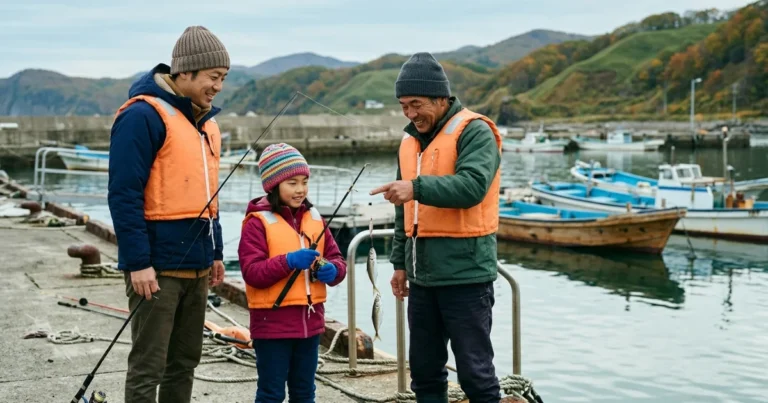
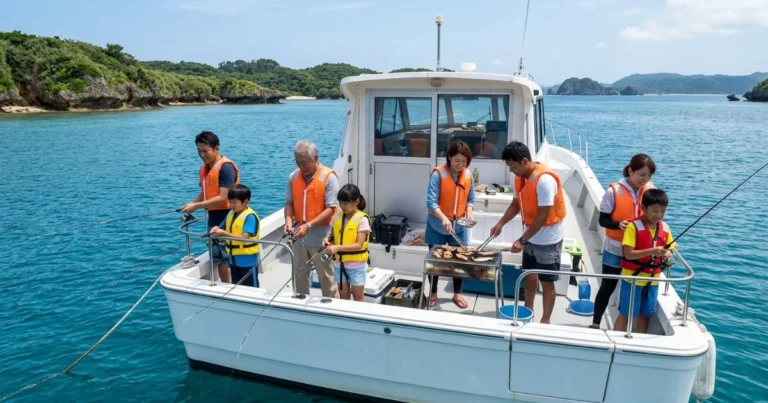
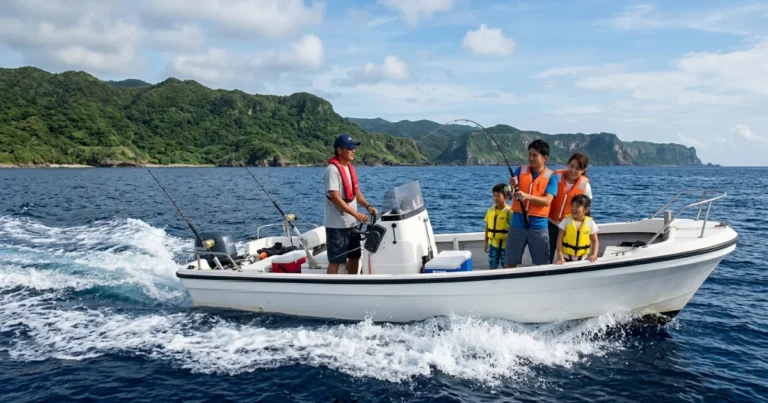
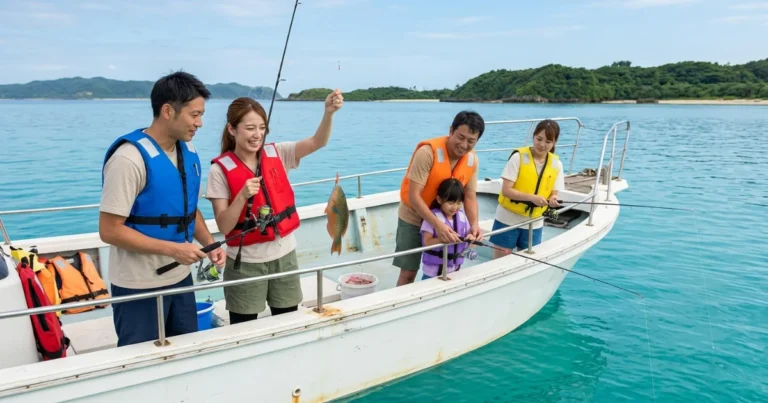
Most travelers who reach Tohoku head for Sendai, the temples of Hiraizumi or the hot springs of Zao. Far fewer cross to the Sea of Japan side, where the port town of Sakata sits at the mouth of the Mogami River in Yamagata Prefecture. That is where this tour begins: a full day of boat fishing off the Shonai coast with an English-speaking guide, followed by a meal made from whatever you catch.
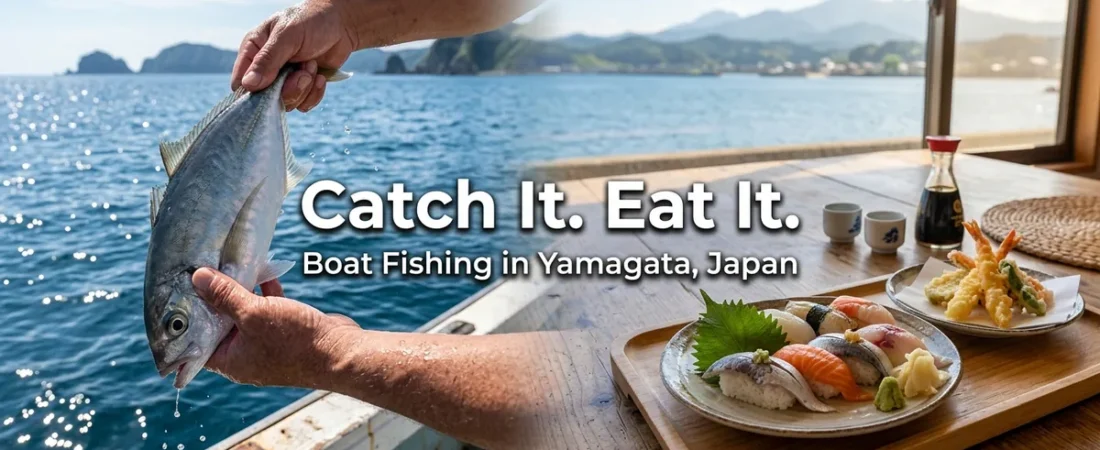
According to KKday, local chefs prepare the day’s fish as sushi, tempura or grilled dishes, depending on the type of fish. For a visitor who has eaten sushi in Tokyo but never caught the fish on the plate, that is the main draw.
This guide covers what the tour includes, how to reach a 6:00 AM meeting point in a small regional city, where to stay the night before, and how to get home the same evening.
Prices below are what KKday showed in October 2026 and change with the date and availability.
TOHOKU REGION
Sakata, Yamagata
Meet: 6:00 AM at the entrance of Sakata Seafood Market
At a Glance
- Price: about US$253 per adult (12 and over) and about US$168 per child (6–11) on KKday (as of October 9, 2026)
- Meet: 6:00 AM at the entrance of Sakata Seafood Market (Sakata Kaisen Ichiba), 2-5-10 Funaba-cho, Sakata
- Length: about 9 hours, ending at 3:00 PM
- Included: boat fishing, cooking your catch and an English-speaking guide. The tour FAQ says rods, reels and bait are provided
- Ages: 6 and over. Children under 6 can’t join
- Free cancellation: up to 15 days before
- Booking: confirmed within 1 day of ordering. Show the QR code on the day
Prices and available dates vary by day. Check the booking page before you book.
One small point before you book: this product is not available when KKday is set to Japanese, so use the English-language site.
Is This Tour Right for You?
✅ Great if you…
- want to fish with an English-speaking guide
- want a chef to cook what you catch
- are new to fishing. Gear is provided, and the FAQ says beginners are welcome
- are traveling around Tohoku or the Sea of Japan coast
⚠️ Think twice if you…
- can’t stay in Sakata the night before. The tour starts at 6:00 AM
- might change plans in the last week. From 7 days before, there’s no refund
- want to know the target fish before you go. The listing doesn’t name them
- are traveling with children under 6. They can’t join
📅 When the tour runs
Open △ Check dates Closed
KKday’s FAQ gives the season as spring through autumn. Fishing seasons shift a little from year to year, so check dates on the booking page.
Source: KKday listing, checked October 2026.
Why This Sakata Fishing Tour Stands Out
Your Catch Becomes Lunch
In Japan, eating the fish you caught is often treated as the best part of a fishing trip. Some seaside inns and harbor restaurants will cook a guest’s catch, and on this blog I have covered the same idea in Tokyo Bay and at Awakan on Awaji Island.
What this tour adds is choice by species. According to KKday, the chefs decide how to cook each fish based on what it is: sushi for some, tempura or grilling for others. That reflects a basic idea in Japanese cooking, where the preparation is chosen to suit the ingredient rather than the other way round. You will not know the menu until you see what you catch, which is part of the fun.
If you have food allergies, KKday asks you to write them in the order notes when you book, so the kitchen knows in advance.
A note on raw fish. Japan’s Ministry of Health, Labour and Welfare warns that Anisakis larvae live in seafood such as mackerel, horse mackerel, sardines and squid. Eating them raw can cause severe stomach pain within hours. Freezing at −20°C for at least 24 hours, or cooking at 70°C or higher (or 60°C for 1 minute), kills them. Vinegar, salt, soy sauce and wasabi do not. On this tour, a chef prepares the fish, so leave raw dishes to them.
An English-Speaking Guide, With Gear and Bait Provided
Fishing boats in regional Japan generally operate in Japanese, and a first-time visitor can find it hard to follow how the rigs work or when to reel in. This tour is sold to international travelers, and the operator and boat are not named on the tour page.

I don’t speak any Japanese. Who will I talk to on the boat?

According to KKday, an English-speaking guide comes with you. The tour FAQ explains what the guide helps with.
According to the tour’s FAQ:
- Rods, reels and bait are provided on site, so you do not need your own gear or any fishing experience.
- The guide explains which fish to target and how to fish for them on the day, since the target species change with the season and sea conditions.
- Beginners and experienced anglers are both welcome.
If you usually travel with your own tackle, you can leave it at home for this one. For other trips, see how to bring fishing rods to Japan.
The Shonai Coast and Sakata’s Port
The Shonai region is the coastal plain of western Yamagata, facing the Sea of Japan. Sakata is its port. The town’s rice warehouses, the Sankyo Storehouse, were built in 1893 by the former Sakai clan lords to store rice, according to Sakata City, which calls them a symbol of Shonai as rice country. Port, rice and fish are the threads that run through the town.
The meeting point says a lot about the day. Sakata Seafood Market sits by the harbor, and according to VISIT YAMAGATA, the official tourism site of Yamagata Prefecture, its 1st floor is a fresh fish shop and its 2nd floor is the seafood restaurant Kaisen Donya Tobishima. VISIT YAMAGATA describes the restaurant as crowded from early in the morning. You meet your guide at its entrance at 6:00 AM, in a working port before most of the town is awake.
The tour’s FAQ gives a broad best-season window rather than specific months, and it does not name target fish, because they change with the season and the sea.
What You Might Catch off Shonai, Month by Month
The KKday page does not name the fish you will target, and its FAQ describes a broad best-season window rather than specific months. To give you a feel for the coast, the table below pulls together what an angling guide site (published in July 2026), Yamagata Prefecture’s fisheries institute and charter-boat guides report for the Shonai coast. It describes the coast in general, not what this tour will fish for, and some entries apply only to boats or only to the shore.
| Month | Fish reported | Notes |
|---|---|---|
| January | Alphonsino (akamutsu) by boat | A charter-boat guide describes slow jigging in medium-deep water for akamutsu. No reliable shore information found for this month. |
| February | Red sea bream (madai) by boat | Charter-boat guides describe tai-rubber (tai-raba) and jigging for sea bream. The prefecture says sea bream is at its fattiest in February. |
| March | Sea bream by boat | Charter-boat guides place boat fishing for sea bream between February and April. No reliable shore information found for this month. |
| April | Sea bream by boat (until April); bigfin reef squid (aori-ika) from April; horse mackerel (aji) from late April | Squid is fished by egging, and the April–June squid are described as the larger ones. Horse mackerel is taken on sabiki rigs or light jig-head fishing (ajing), and fish over 20 cm are reported in late April. |
| May | Black sea bream (kurodai); bigfin reef squid; horse mackerel | An angling guide site describes black sea bream from May to November, with spawning-time runs peaking around May. They are fished from ports and rocks with float or dough-ball methods. |
| June | Black sea bream; bigfin reef squid (until June); by boat: alphonsino and tuna | A charter-boat guide describes casting for tuna near Tobishima from June to November. This tour is not known to offer that. A local saying quoted in the prefecture’s guide says marbled flounder (magarei) is thick and tasty from early summer into autumn, with June fish especially prized. |
| July | Black sea bream; Japanese whiting (shiro-gisu); by boat: alphonsino and tuna | Whiting is fished with light casting from beaches and ports. No month-specific shore information found beyond this. |
| August | Black sea bream; Japanese whiting; by boat: alphonsino and tuna | Same as July. |
| September | Bigfin reef squid (September–November); nearshore blue fish by boat; Spanish mackerel (sawara) | Squid in these months are described as more of a numbers game. Boat jigging for blue fish is reported from September to December. Yamagata Prefecture’s fisheries institute lists the Spanish mackerel fishing season as September to December. |
| October | Young yellowtail (inada, wakashi) from late October; horse mackerel; bigfin reef squid; black sea bream | The prefecture’s guide says sandfish (hatahata) are fattiest in October, and a local saying puts the tastiest period at September and October. |
| November | Black sea bream (until November); bigfin reef squid (until November); sandfish from late November; blue fish | Sandfish are caught from late November to December on night float or sabiki rigs, often after rough seas. |
| December | Sandfish; blue fish and Spanish mackerel (until December); alphonsino | No other reliable information found for this month. |
Rockfish and greenling are also mentioned by local anglers, but no specific months were found, so they are left out of the table. Sizes are rarely given in these sources, apart from the late-April horse mackerel above.
A few of these names are worth knowing at the table. Japanese yellowtail changes its name as it grows, so inada and wakashi are younger stages of the same fish that becomes buri. If your guide or chef uses a Japanese name, asking “What is this fish?” is a good way to start a conversation.
Catches depend on the weather, the sea and the day, and none of these months is a guarantee. Because the tour page gives neither months nor a fish list, ask your guide on the day what is biting.
How to Get to Sakata
Sakata is on the Sea of Japan side of Honshu, and there is no shinkansen to the town itself. From Tokyo you either combine a bullet train with a limited express, or fly to Shonai Airport. Whichever you choose, the 6:00 AM meeting time shapes the whole plan.
From Tokyo by Train
Take the Joetsu Shinkansen from Tokyo to Niigata, then change to the Limited Express Inaho, which runs along the coast to Sakata. Niigata to Sakata takes about 2 hours 15 minutes.
The tour starts at 6:00 AM. Can’t I just take an early train from Tokyo that morning?
Not by this route. The first Inaho of the day leaves Niigata at 8:23, so plan to arrive in Sakata the evening before.
According to JR East’s timetable for October 2026, these are the evening Inaho trains from Niigata to Sakata (the times are the same on weekdays and weekends):
| Train | Leaves Niigata | Arrives Sakata |
|---|---|---|
| Inaho 9 | 17:58 | 20:10 |
| Inaho 11 | 19:38 | 21:50 |
| Inaho 13 (last train) | 21:07 | 23:19 |
Inaho 9 is the comfortable choice: you reach Sakata in time to check in, have dinner and get some sleep before a 5:00-something alarm. The last train arriving at 23:19 leaves very little rest before the meeting time. Timetables change, so check JR East’s site for your travel date.
JR EAST PASS. Since March 14, 2026, JR East sells a single combined JR EAST PASS that replaced the former Tohoku-area and Nagano/Niigata-area passes. According to JR East, it comes as a 5-day or 10-day pass, covers all JR East lines including the Joetsu Shinkansen and the Inaho, and is only for travelers with a non-Japanese passport. For a simple Tokyo–Sakata round trip it may not pay off, so it is generally worth it only if you are also traveling elsewhere in eastern Japan, such as Sendai, Aomori or Nagano.
Prices, availability, and cancellation terms vary by date, so please check the booking page for the latest details.
👉 Get the JR EAST PASS on Klook
Sakata Station Tips: No Suica, and Where Your Luggage Goes
If you have been tapping a Suica card through the gates all over Tokyo, Sakata Station may catch you out: its ticket gates don’t accept Suica, according to JR East. Buy a paper ticket, or use a JR pass or an Eki-net booking.
Nine hours on a boat… so where does my suitcase go?
You have a few options, and the simplest is to decide before you check in. Pack a small day bag for the boat.
- Stay two nights. Book the night after the tour as well, and your bags stay in your room. This also gives you time for a hot bath and a relaxed dinner after a long day on the water.
- Ask your hotel to keep your bags. Route Inn lists luggage storage, and Hiyoriyama Hotel keeps bags for early arrivals. Whether they hold bags after check-out until the evening was not stated, so confirm at check-in.
- Use the coin lockers at Sakata Station. They are listed on JR East’s station page, but sizes and prices are not, so a large suitcase may not fit.
- Keep them in the car. If you rent a car, this is the simplest choice.
For the boat itself, a small bag with your phone, a change of clothes and something warm is usually enough.
What the Day Looks Like
According to KKday, the day runs like this:
- 6:00 AM: meet your English-speaking guide at the entrance of Sakata Seafood Market. Show the QR code from your KKday voucher.
- Boat fishing off the Shonai coast. Rods, reels and bait are provided, and the guide explains the target fish and how to catch them.
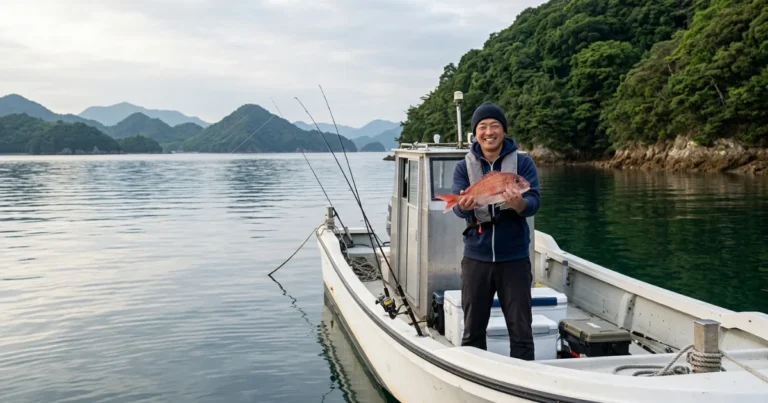
- Your catch is cooked. Local chefs prepare it as sushi, tempura or grilled dishes, depending on the fish, and you eat it as your meal.
- 3:00 PM: the tour ends.
The tour page does not give a minute-by-minute schedule or say how long you spend on the water, so treat the middle of the day as flexible. Sea conditions decide a lot on a fishing day.
🔍 What the KKday listing doesn’t say
- the boat company
- the target fish
- where your catch is cooked and served
- where the tour ends
- the boat’s facilities, such as a toilet
If any of these matter to you, ask through KKday before you book.
As of October 2026, the KKday page says the tour may be canceled in bad weather or strong wind, and that you will be contacted by email. It does not say whether that means a refund or a new date, or when the decision is made. Check your inbox the evening before and again in the morning before you leave. Terms can change, so please check the booking page before you book.
Booking and Cancellation
KKday’s cancellation policy for this tour (as of October 2026):
If you arrive after 6:00 AM, KKday cancels the booking automatically. Book at least 15 days ahead if you want to keep the free cancellation.
After the Tour: Getting Home or Staying On
Same-Day Return to Tokyo
The tour ends at 3:00 PM, which leaves enough time to get back to Tokyo the same evening. Sakata Station is about 7 minutes by car from the market, according to the market’s website (route on Google Maps).
By train, according to JR East’s October 2026 timetable:
| Leave Sakata | Change at Niigata | Arrive Tokyo |
|---|---|---|
| 16:03 (Inaho 12) | Arrive 18:10, then Toki 340 at 18:58 | 20:56 |
| 18:18 (Inaho 14) | Arrive 20:22, then Toki 346 at 21:40 (last train) | 23:40 |
There is also a Toki at 18:18 from Niigata that reaches Tokyo at 20:12, but that leaves only 8 minutes to change from Inaho 12, so the 18:58 is the safer plan.
By plane, the last flight from Shonai to Haneda leaves at 17:40, as of October 2026. The flight takes about 1 hour. Shonai Airport is about 19 minutes by car from the market (route on Google Maps).
Things to Do in Sakata
If you can stay another night, Sakata rewards a slower look.
- Sankyo Storehouse (Sankyo Soko). Rice warehouses built in 1893 by the former Sakai clan lords and designated a National Historic Site in 2021, according to Sakata City. They were also a filming location for the NHK drama Oshin. Only Building 12, the information center (9:00–16:30), is open inside, but you can see the exterior at any time, and it is lit up from 18:00 to 22:00. Admission is free.
- Breakfast at Sakata Seafood Market. You will see the market at 6:00 AM, but its restaurant is not open yet. According to VISIT YAMAGATA, Kaisen Donya Tobishima on the 2nd floor serves seafood bowls and set meals from 7:00 to 9:00 in the morning and from 11:00 to 19:00 (last order 18:30), and it is closed on irregular days. The morning after the tour is a good time to go back.
- Tobishima Island. Yamagata Prefecture’s only remote island is reached by the ferry Tobishima from a terminal about 200 m from the market, and the crossing takes about 75 minutes. According to Sakata City, reservations are required on days with two or three sailings, mainly from May to August. The regular ferry returned to service on September 30, 2026, after repairs.
- Kamo Aquarium (Tsuruoka). A small aquarium on the Shonai coast known for its large collection of jellyfish. Check the official site for current hours and admission.
Practical Tips
- No gear needed. According to the tour’s FAQ, rods, reels and bait are provided, so you can travel light.
- Plan breakfast the night before. You leave your hotel around 5:30 AM. Ask whether breakfast is served that early, and if not, buy something to eat the evening before.
- Dress for the water. Conditions on the water can differ from the shore, so bring a layer you can add or remove, plus sun protection for bright days.
- Tell KKday about allergies. Write them in the order notes when you book, because your lunch is made from your catch.
- Watch your email. Weather cancellations are sent by email, so check your inbox the evening before and again in the morning.
- Check the booking terms. Prices, availability, and cancellation terms vary by date, so please check the booking page for the latest details.
- Carry some cash. It is recommended to have some yen for taxis and small shops, alongside your cards, because payment options at the market and small shops were not confirmed.
- Stay connected. You will need data for your QR voucher, maps and the KKday app on the day.
For a comparison of eSIMs at coastal spots, see my guide to the best eSIM for fishing in Japan.
If you plan to fish on your own elsewhere in Sakata, note that some parts of the port are closed to the public, and fishing rules differ from place to place in Japan. Read Do You Need a Fishing License in Japan? before you go.
FAQ
Do I need fishing experience?
No. According to the tour’s FAQ, both beginners and experienced anglers are welcome, and the gear is provided.
Can children join?
Children aged 6 to 11 can join, and children under 6 cannot. Please check the booking page for the child ticket details.
Is hotel pick-up included?
Pick-up is not listed on the tour page. Everyone meets at the entrance of Sakata Seafood Market at 6:00 AM.
What happens if I am late?
According to KKday, bookings are canceled automatically if you do not arrive by the meeting time.
What happens if the weather is bad?
As of October 2026, the KKday page says the tour may be canceled in bad weather or strong wind and that you will be contacted by email. It does not say whether that means a refund or a new date. Please check the booking page for details.
What is the cancellation policy?
Free up to 15 days before. KKday charges 30% from 8 to 14 days before, and from 7 days before there’s no refund, as of October 2026.
Can I use Suica in Sakata?
Not at Sakata Station’s ticket gates, according to JR East. Buy a paper ticket or use a JR pass or an Eki-net booking.
Can I get back to Tokyo on the same day?
Yes. According to JR East’s October 2026 timetable, the 16:03 Inaho from Sakata connects at Niigata to a Joetsu Shinkansen that reaches Tokyo at 20:56. The last flight from Shonai to Haneda leaves at 17:40.
When is the best season?
The tour’s FAQ gives a broad best-season window rather than specific months. See the month-by-month table above for what is reported on the Shonai coast.
Book Your Sakata Fishing Day
This tour packs a lot into one day: an early start in a working harbor, a day on the Sea of Japan with an English-speaking guide, and a meal made from fish you caught yourself. The main thing to plan is the 6:00 AM start, which means a night in Sakata and a clear idea of how you will reach the market.
Book the tour first, then a hotel that matches how you will get there:
👉 Book the Sakata fishing tour on KKday
👉 Hiyoriyama Hotel on KKday (15-minute walk to the meeting point)
👉 Hotel Route-Inn Sakata on KKday
👉 Yusuitei Isagoya at Yunohama Onsen on Klook
👉 JR EAST PASS on Klook
👉 Rental cars at Shonai Airport on EconomyBookings
Looking for more ideas? See the best sea fishing tours in Japan.