Last checked: October 10, 2026
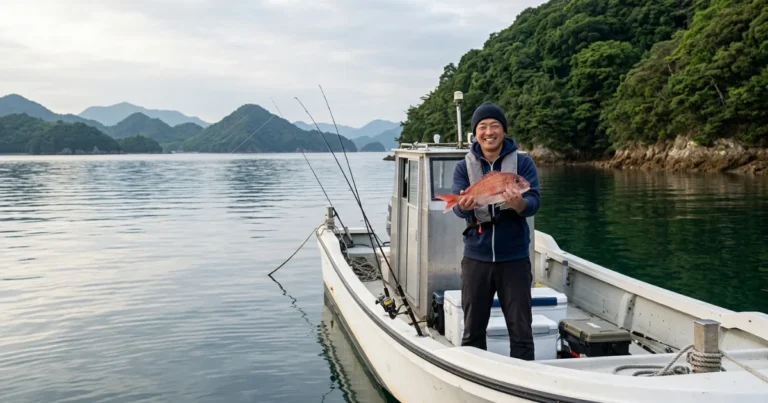
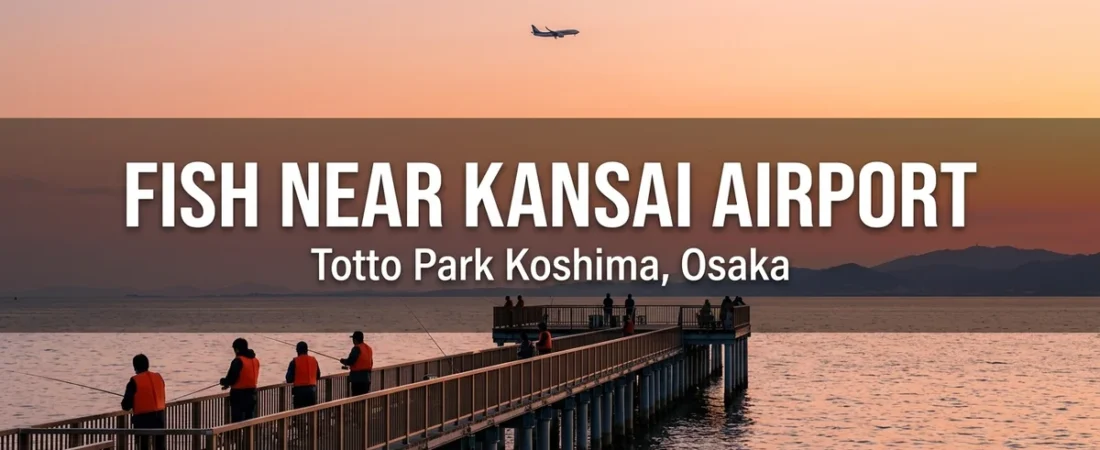
Want to fish the sea near Kansai Airport from a pier you can reach by train and bus, with no boat and no reservation? Totto Park Koshima (とっとパーク小島) is a paid fishing pier in Misaki Town, Osaka. It was built on a pier once used to ship landfill soil for Kansai Airport.
You bring your own rod, buy a ticket on the day and fish from a long lower deck. We built this guide from the park’s official site (Japanese only) and the Misaki Town bus timetable.
KANSAI REGION
Totto Park Koshima, Misaki, Osaka
Getting there: Train to Misaki-koen Station, then a ¥100 community bus
At a Glance
- Admission: adult ¥1,500 all day, ¥1,000 from 15:00; elementary and junior high students ¥750 / ¥500 (as of October 2026)
- Hours: 6:00–20:00 (March–November), 7:00–18:00 (December–February)
- Closed: every Friday (open if it’s a national holiday), and December 31–January 2
- Life jackets: required for everyone on the fishing deck. Free loaners are limited
- Rental tackle: none
- Payment: bring cash, including coins
- Getting there: train to Misaki-koen Station (みさき公園駅), then a ¥100 community bus
- Parking: free, 100+ spaces
Admission and hours can change. The park’s official site (Japanese only) has the latest.
Is Totto Park Right for You?
✅ Great if you…
- already have a rod. The park rents no tackle
- want a day trip without a car. A ¥100 community bus stops at the park
- like evening fishing. The ticket drops to ¥1,000 from 15:00
⚠️ Think twice if you…
- don’t own a rod. The park rents none, and we couldn’t confirm the shop sells rods
- can only come on a Friday. The park is closed
- want to fish after dark on a weekend by bus. The last weekend bus leaves at 18:45
- only carry cards. The park asks visitors to bring coins, and we couldn’t confirm cards work
Getting There by Train and Bus
Start on the Nankai Line (南海線) to Misaki-koen Station. From there, the Misaki Town community bus (岬町コミュニティバス) runs to the park.
Namba (なんば) to Misaki-koen Station
about 53 min to 1 hr 6 min · ¥850 · one transfer, at Izumisano or Izumiotsu
Kansai Airport to Misaki-koen Station
about 42 min · ¥770 · one transfer, at Izumisano
Misaki-koen Station to the Totto Park Koshima bus stop
about 19–26 min depending on the trip · ¥100
Source: Yahoo! Transit and the Misaki Town bus timetable, checked October 2026.
A reserved seat on the Rapi:t limited express costs ¥700 more from Namba. Nankai trains accept IC cards.
The bus
- Take the bus signed for Koshima-Sumiyoshi (小島住吉), which stops at Tanagawa Station (多奈川駅). Get off at Totto Park Koshima (とっとパーク小島)
- The fare is ¥100 for adults and children. Pay with cash or a coupon book (11 tickets for ¥1,000, sold on the bus). The timetable lists only cash and coupons, so bring ¥100 coins
- The bus skips the park when it’s closed, so Fridays are out
- We couldn’t confirm whether you can bring a rod or a cooler on board. Ask the driver before you board
Bus arrivals at the park, from Misaki-koen Station (these are the only trips that stop there):
| Day | Arrives at Totto Park Koshima |
|---|---|
| Weekdays | 6:56, 7:19, 8:02, 8:31, 9:03, 9:55, 10:32, 11:27, 11:55, 12:50, 13:16, 13:42, 15:11 |
| Weekends and holidays | 8:27, 9:33, 10:33, 11:49, 12:39, 13:44, 14:44, 15:42 |
Source: Misaki Town community bus timetable (revised April 1, 2024), checked October 2026.
Bus departures from the park. Every trip goes all the way to Misaki-koen Station:
| Day | Leaves Totto Park Koshima |
|---|---|
| Weekdays | 9:02, 9:47, 10:09, 11:02, 11:32, 12:02, 13:22, 14:02, 15:17, 16:02, 17:22, 18:22, 19:22, 20:03 |
| Weekends and holidays | 10:57, 11:57, 12:52, 14:05, 15:05, 16:05, 17:05, 18:05, 18:45 |
Source: Misaki Town community bus timetable (revised April 1, 2024), checked October 2026.
If you want a full morning by train, we’d pick a weekday. The first weekday bus arrives at 6:56, but the first weekend bus arrives at 8:27, and the park opens at 6:00.

Do I need a numbered ticket if I come by train?

The numbered tickets are described only for people arriving by car. The park’s notice says nothing about train and bus visitors. Ask at the ticket window.
If you’ll ride Nankai trains a lot over two days, a Nankai 2-day pass for foreign visitors also exists. For one round trip from Namba (¥1,700), regular fares are cheaper.
Mobile data helps when you’re checking bus times on the way. Our eSIM guide covers the options.
Getting There by Car
The park has a free parking lot with 100+ spaces. The official directions:
1. Take the Hanshin Expressway Bayshore Route to Izumisano-minami (泉佐野南), or the Hanwa Expressway to Sennan IC (泉南IC)
2. Follow National Route 26 toward Wakayama
3. Turn right at the Fuke-chuo intersection (深日中央交差点), a roundabout
4. Take Prefectural Road Misaki-Kada Port Line (府道岬加太港線) toward Kada and Koshima. The park is about 10 minutes from there
From Kansai Airport, Google Maps shows about 43 minutes and 39 km in usual traffic, with toll sections (checked October 2026). See the route on Google Maps.
Numbered tickets for early arrivals
If you drive, you may get a numbered ticket (整理券, seiriken). It sets the order for buying admission tickets.
- Staff hand them out in the parking lot from 5:00 (6:00 in winter), on weekdays and weekends
- Park in the numbered spaces in order and wait in your car. Staff give tickets to each car in turn and check how many people are inside
- You can’t take tickets for people who haven’t arrived. Friends who show up later can’t join your car to get one
- Don’t idle your engine or talk loudly outside the car while you wait
- Cheating means no admission
If you rent a car at Kansai Airport, we’d pick a 5:00 arrival (6:00 in winter). The numbered ticket decides who buys admission first.
Compare rental cars at Kansai Airport →Before You Enter: Life Jackets, Tickets and Plates
Step 1: Wear a life jacket
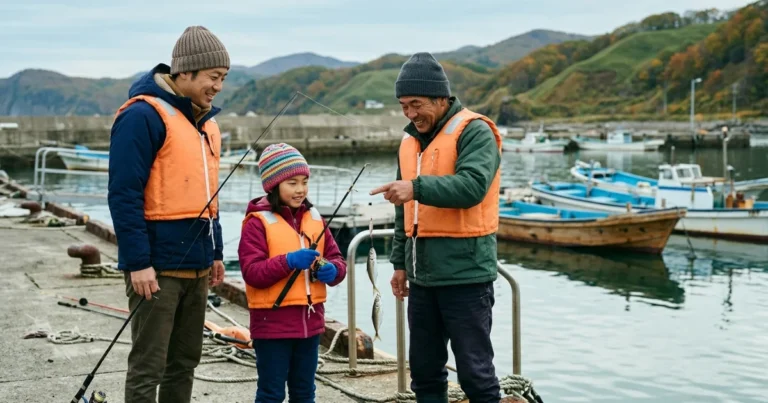
Everyone on the fishing deck must wear one since June 1, 2026. Put it on before you go to the sales desk. The park refuses entry without one.
Step 2: Buy your ticket
Pay at the desk on the day. There is no reservation and no sightseeing-only ticket. Everyone on the fishing deck pays the fishing fee.
Step 3: Hang your plate
Each paying visitor (elementary school age and up) gets one space marked with red lines. Hang the white plate on your rod holder.
Life jackets
- The park sells jackets in free size, 130 cm, 110 cm and 90 cm. We couldn’t confirm the prices
- Fixed-buoyancy vests and inflatable vests or waist belts are allowed. The mouth-inflated, ring-style kind is not
- The park lends free jackets in adult and child sizes, but only a limited number. The group’s representative writes a name and a cell phone number. Once they’re gone, they’re gone. We couldn’t confirm whether a foreign phone number works
I don’t have a life jacket. What do I do?
Buy one at the park, or bring your own. We’d skip the free loaners as a plan, because the supply is limited and can run out.
Plates and spaces
- Fishing while walking (for squid or octopus, for example)? Put your plate in the space where you have a rod out. You give up your old space
- Don’t put a rod out in someone else’s space, unless they’re in your group
- Staff may move your gear if it sits in a space with no plate
- The “standing area” (立ち釣り席, where you fish from the walkway) allows hand-held rods only. No rod stands
Park Rules (Translated from the Japanese Signs and Site)
The signs and the official site are Japanese only. This is our translation of the official rules.
⚠️ Life jackets — No life jacket, no entry
- Children — Elementary school age and younger can’t enter without a guardian. Junior high students and younger can’t enter without a guardian after sunset. Children under elementary school age are free, but they fish in the same space as the paying adult
Other rules:
- Two rods per person at most. Catch fish only with a rod or by hand line
- No dango (団子) fishing styles, known as Kishu-zuri (紀州釣り) or nuka-giri (ヌカ切り). Don’t use rice bran, sand or red clay
- No fire anywhere, including the parking lot. No dangerous items and no pets
- No fishing while drunk. No fishing methods that could hurt others. Don’t take up more room than you need
- Don’t throw trash or cans anywhere except the designated places. We couldn’t confirm where the bins are or whether you take trash home, so ask (the phrase is below)
- The whole fishing area is non-smoking. The smoking area is in front of the rest house on the pier
- The park can also refuse entry in bad weather or when it judges there’s a risk of accidents
What You Can Catch by Month
The park’s chart marks these months with ● for each fish.
| Fish | Months marked ● |
|---|---|
| Red seabream (madai) | April–June, September–December |
| Blackhead seabream (chinu) | All year |
| Japanese seabass (suzuki) | January, March–June, November–December |
| Flounder (hirame) | April–June, November–December |
| Marbled flounder (makogarei) | January–May, November–December |
| Rockfish (mebaru) | January–May, November–December |
| False kelpfish (gashira), a scorpionfish relative | January–April, November–December |
| Barred knifejaw (ishidai) | July–October |
| Threadsail filefish (kawahagi) | July–November |
| Black scraper (umazura) | January, May–December |
| Horse mackerel (aji) | January–February, April–December |
| Hairtail (tachiuo) | August–November |
| Largescale blackfish (gure) | May–October |
| Young Japanese amberjack (hamachi) | September–December |
| Young Japanese amberjack, larger (mejiro) | August–December |
| Bigfin reef squid (aori-ika) | August–November |
| Octopus (madako) | January, June–September, December |
Source: Totto Park Koshima official site, “Fish by month”, checked October 2026.
The chart’s △ marks aren’t explained, so we list only the ● months.
The park’s catch reports for October 8 and 10 list bigfin reef squid, young Japanese amberjack (49 cm) and mejiro. They also list red seabream (57 cm), blackhead seabream, false kelpfish, threadsail filefish, horse mackerel, mackerel and hairtail. The hairtail came on October 8 between 17:00 and 20:00. Catches vary by day and aren’t guaranteed.
What anglers caught, and how
The park posts one or more standout catches a day, with the fish and the method. We went through a year of them, from November 2025 to mid-October 2026, about 30 a month. Because these are standout catches, small fish appear less often than they’re caught. Under each season, the first group was named in at least one in ten reports. “Also reported” fish were named in two or more.
December – February
- Horse mackerel (aji)sabiki
- Japanese amberjack (hamachi, mejiro, buri)nomase-sabikinomaselure
- Flounder (hirame)nomasenomase-sabikisabiki
- Rockfish (mebaru)sabiki
Also reported
- Red seabream (madai)kago-zurizubo
- Octopus (madako)tako-egieging
- Mackerel (saba)nomase-sabiki
- Japanese seabass (suzuki)nomase
- Cuttlefish (kōika)eging
- Spanish mackerel (sawara)nomaselure
- Black scraper (umazura)sabikikago-zuri
March – April
- Horse mackerelsabiki
- Japanese amberjacknomase
- Rockfishsabikifukasezubo
- Floundernomase
- Red seabreamkago-zurifukase
- Japanese seabassnomasezubo
Also reported
- Octopustako-egiegingnomase
- Mackerelsabiki
- Cuttlefisheging
- False kelpfish (gashira)sabiki
- Largescale blackfish (gure)fukasesabiki
- Blackhead seabream (chinu)bottom rigfukasesabiki
- Black scrapersabiki
May – June
- Largescale blackfishfukasesabikifloat fishing
- Red seabreamkago-zurinomase-sabikinomase
- Horse mackerelsabiki
- Japanese amberjacklurenomase-sabikikago-zuri
Also reported
- Floundernomase-sabikinomasesabiki
- Octopustako-tenyatako-egieging
- Blackfin seabass (hirasuzuki)nomasefloat fishing
- Bigfin reef squid (aori-ika)eging
- False kelpfishzubo
- Grouper (akō)nomase-sabiki
- Blackhead seabreamkago-zurifloat fishingzubo
- Threadsail filefish (kawahagi)sabikizubo
- Sardines (iwashi)sabiki
- Small tuna (sōda-gatsuo)kago-zurilure
- Rockfishfloat fishing
- Flatfish (karei)casting
- Mackerelmethod not reported
July – August
- Horse mackerelsabiki
- Red seabreamkago-zurifloat fishing
Also reported
- Largescale blackfishfukasesabikizubo
- Young greater amberjack (shio)nomase-sabikinomase
- Blackhead seabreamfukasenomase-sabiki
- False kelpfishzubonomase
- Bigfin reef squideging
- Japanese amberjacklurenomase-sabikinomase
- Floundernomase-sabikinomasesabiki
- Black scraperfukase
- Threadsail filefishsabiki
- Japanese halfbeak (sayori)fukase
- Hairtail (tachiuo), octopusmethod not reported
September – October
- Horse mackerelsabiki
- Bigfin reef squideging
- Japanese amberjacknomase-sabikinomase
- Young greater amberjack (shio)nomase-sabikisabikinomase
- Hairtailmethod not reported
Also reported
- Cuttlefisheging
- Largescale blackfishfukasesabikinomase-sabiki
- Floundernomase-sabikisabikinomase
- Threadsail filefishzubo
- Blackhead seabreamnomase-sabikizubo
- Red seabreamfloat fishingsabiki
November
- Horse mackerelsabiki
- Red seabreamkago-zuribottom rig
- Bigfin reef squideging
- Octopusegingtako-eginomase
- Threadsail filefishsabikizubo
Also reported
- Black scrapersabikikago-zuri
- Floundernomase
- Young barred knifejaw (sanbasō)zubosabiki
- Cuttlefisheging
The methods in plain words
- sabiki — a rig of many small hooks, lowered into a cloud of chum for small schooling fish
- nomase — a small live fish used as bait for bigger fish
- nomase-sabiki — a common Japanese pier term: small fish such as horse mackerel caught on a sabiki rig, used live as bait for bigger fish
- kago-zuri — a float rig with a small basket of chum, cast out and shaken to release the chum
- fukase — chum scattered to draw fish in, with a float rig drifting in the chum
- float fishing — bait hung under a float
- zubo fishing — short rods set along the pier edge, each at a different depth. Totto allows two rods per person
- eging — casting a squid jig (egi) and jerking it to tempt squid
- tako-egi — a lure made for octopus, dragged slowly along the bottom without bait
- tako-tenya — an octopus rig with bait tied onto a weighted hook
- lure — a hard or soft lure
- bottom rig — bait left on the bottom near your feet (bukkomi)
- casting — a sinker rig cast out from the pier
Source: Totto Park Koshima catch reports, November 2025 to October 2026, checked October 2026. Hairtail reports name “various methods” (各種釣法), so no method is shown. Method descriptions: TSURI HACK, Tsuri News and PROX.
Paying, Bait and Food
Pay in cash, scene by scene:
| Where | How to pay |
|---|---|
| Admission and the shop (bait and tackle) | Bring cash, including coins. The park asks for small change. We couldn’t confirm cards work |
| Totto restaurant (とっと食堂) | We couldn’t confirm. Carry cash |
| Community bus | Cash (¥100) or a coupon book |
| Nankai train | IC cards work |
Source: park notice and Misaki Town bus timetable, checked October 2026.
The shop sells bait, tax included (as of October 2026):
| Bait | Price |
|---|---|
| Sea worms (aoisome), 30 g | ¥500 |
| Frozen krill, hook-bait quality, 3 kg | ¥1,500 |
| Frozen krill, hook-bait quality, 1.5 kg | ¥850 |
| Hook-bait krill and G-krill | from ¥500 |
| Mysid shrimp (amiebi), large (about 2 kg, domestic) | ¥850 |
| Mysid shrimp, small (about 800 g, domestic) | ¥450 |
| Ice | ¥200 |
Source: Totto Park Koshima official site, checked October 2026.
- Restaurant: Dine-in at Totto restaurant runs 11:00–15:00 (last order 14:45). Lunch boxes (bento, from ¥700) go on sale 10:30–11:00. Monday to Thursday, except holidays, they’re sold until noon
- Shop and toilets: The rest house at the sea end of the pier has the tackle and bait shop and a café corner. It also has separate flush toilets for men and women
- Landing net: The deck sits 2.5–3.5 m above the water. The park recommends a landing net with a handle 5.3–5.4 m long
The shop takes cash, so we’d bring plenty of coins for bait and ice.
Evening Fishing and the Last Bus
From 15:00 the adult ticket drops from ¥1,500 to ¥1,000. If you fish by bus on a weekday, the last bus gives you the most time.
| Day | Last bus leaves the park | Arrives at Misaki-koen Station |
|---|---|---|
| Weekdays | 20:03 | 20:16 |
| Weekends and holidays | 18:45 | 19:11 |
Source: Misaki Town community bus timetable, checked October 2026.
For an evening session by bus, we’d pick a weekday, Monday to Thursday. The last bus leaves at 20:03, against 18:45 on weekends, and the park is closed Fridays.
Can I fish until dark on a weekend?
Only if you’re happy to leave by 18:45. That’s the last weekend bus.
In December–February the park closes at 18:00, so plan to leave earlier.
Useful Japanese at the Park
We couldn’t confirm English-speaking staff, so show your phone or read these aloud.
| English | Japanese | How to say it |
|---|---|---|
| Can I borrow a free life jacket? | ライフジャケットを借りられますか? | Raifu jaketto o kariraremasu ka? |
| One adult ticket, please. | 大人1枚お願いします。 | Otona ichi-mai onegai shimasu. |
| Where can I throw away my trash? | ごみはどこに捨てればいいですか? | Gomi wa doko ni sutereba ii desu ka? |
Luggage and Nearby
The park’s official site doesn’t mention lockers. If you’re coming from Namba with a big bag, we’d drop it there first. Then ride Nankai with only your rod and a day bag.
Find luggage storage near Namba Station →Awaji Island by ferry
The Fuke-Sumoto Liner (深日洲本ライナー) links Fuke Port (深日港) with Sumoto Port (洲本港) on Awaji Island. In 2026 it runs only on weekends and holidays, April 25–November 8. We couldn’t confirm the 2026 fare or times, so check the Fuke-Sumoto Liner website before you go. Our Awakan guide covers a fishing hotel on Awaji.
FAQ
QIs the park open on Fridays?
No. It’s closed every Friday, unless that Friday is a national holiday. It also closes December 31–January 2.
QCan I rent a rod?
No. The park rents no tackle. The shop sells tackle and bait, but we couldn’t confirm it sells rods.
QDo I need a numbered ticket if I come by train?
The notice describes numbered tickets only for people who arrive by car. Ask at the ticket window.
QIs a life jacket required?
Yes. Everyone on the fishing deck must wear one. The park sells them and lends a limited number for free.
QCan I pay by card?
We couldn’t confirm it. The park asks for small change, so bring cash and ¥100 coins for the bus.
QDoes anyone speak English?
We couldn’t confirm it, and the official site is Japanese only. The park’s phone number is 072-447-5126 (from abroad, +81-72-447-5126). At the desk, the phrases above help.
QDo I need a fishing license?
No. We found no license system for rod fishing in the sea in official sources, and Japan’s Fisheries Agency asks everyone to follow local rules. For more, see do you need a fishing license in Japan?
Plan Your Trip
Bring a rod, a vest and cash
The park rents no tackle, requires a life jacket and asks for small change.
Go on a weekday
The first bus arrives at 6:56 and the last leaves at 20:03. Weekends run 8:27 to 18:45.
Skip Fridays
The park is closed and the bus doesn’t stop there.
If you’d rather drive from the airport, compare cars before you go.
Compare rental cars at Kansai Airport →Reel in the day, then catch the last bus back to the station.