Last checked: October 11, 2026
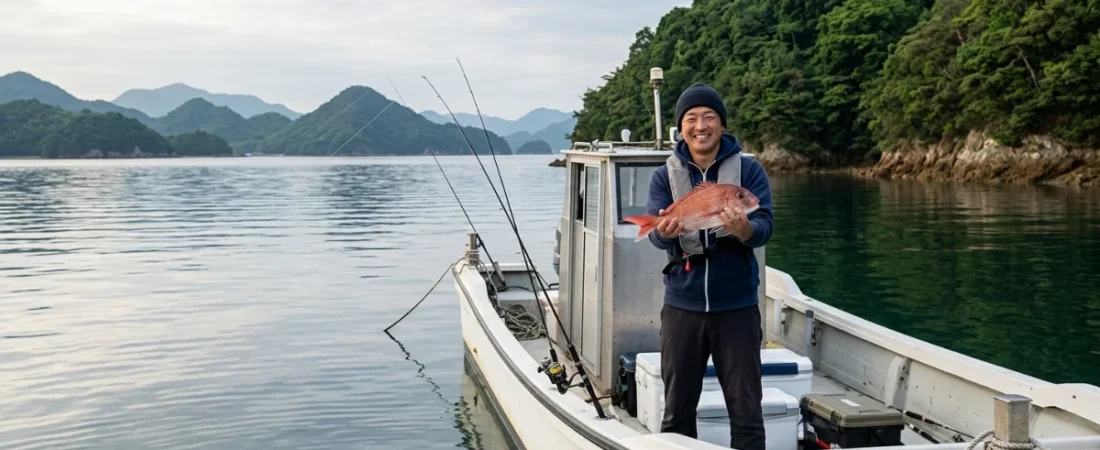
Hooked on the idea of fishing the Seto Inland Sea, but not sure when to go or where to start? This sea lies between Honshu, Shikoku and Kyushu, and what bites changes a lot from season to season.
This guide gives you a season-by-season rundown, a month-by-month calendar and a prefecture-by-prefecture list of places to fish. It also points you to our spot-by-spot articles. It’s a planning guide, not a trip report.
All the seasonal information comes from fishing websites, a personal blog and a tackle-maker’s column. We name each one. Treat the months as a guide, not a promise.
At a Glance
- Most varied season: autumn, with October the strongest month, according to FISH OUT
- Spring: red seabream. Summer: sillago and octopus. Winter: rockfish
- No gear? Start with the Osaka Bay fishing guide
- Fishing from your hotel: Awakan on Awaji Island
- License and local rules: see our fishing license guide
Why the Seto Inland Sea?
Islands and narrow straits fill this sea, and the tide runs fast in places. Hama-angler, a personal fishing blog, says Kurushima Strait (来島海峡, Kurushima Kaikyo) is one of Japan’s “three great fast tides”. The current there can top 10 knots at its strongest.
The water temperature swings too. The same blog says it reaches 25–28°C in August and September and drops to about 10°C in January and February.
That swing is why the main fish change with the season. It also means one trip date doesn’t fit every fish.
What’s Biting by Season
Four sources feed this section. FISH OUT is a Hiroshima fishing information site. JIGGINGNAVI is a jigging information site. SUNLINE is a fishing line maker, and we use its 2024 column. Hama-angler is the personal blog above.
Spring
Hama-angler says blackhead seabream (chinu) and red seabream (madai) spawn in spring. It also reports red seabream of 60–70 cm around the Kasaoka Islands. JIGGINGNAVI says Japanese Spanish mackerel (sawara) move on to Hiuchi-nada (燧灘) and Bisan-seto (備讃瀬戸) around May. On Shiraishi Island, hama-angler reports spring catches of large adult bigfin reef squid (aori-ika) of 500 g to 2 kg.
Summer
FISH OUT marks Japanese sillago (kisu), blackhead seabream and octopus (tako) as peak. Sillago and blackhead seabream peak from June to August, and octopus from July to August. SUNLINE says the high season for blackhead seabream in Hiroshima Bay runs from mid-June to late August. JIGGINGNAVI says young greater amberjack (kanpachi) come close to shore from July to October.
Autumn
Hama-angler calls autumn the peak for variety. FISH OUT marks horse mackerel (aji), seabass (suzuki), bigfin reef squid and shore-jigging fish as peak from September to November. JIGGINGNAVI says yellowtail (buri) are most active from September to November. Japanese Spanish mackerel feed heavily in Suo-nada (周防灘) and Iyo-nada (伊予灘) in autumn. Hama-angler adds that horse mackerel from autumn into winter are especially fatty.
Winter
Hama-angler says rockfish (mebaru) and false kelpfish (kasago) lead the way. FISH OUT marks kasago as peak from December to February and flounder (karei) as peak in November and December. JIGGINGNAVI says some yellowtail stay around Akashi Strait (明石海峡) and Harima-nada (播磨灘) instead of heading south.

Which season should I pick?

If you can choose your dates, we’d pick October. FISH OUT calls it the most promising month of autumn. It marks six shore fish as peak that month: horse mackerel, goby (haze), hairtail (tachiuo), bigfin reef squid, seabass and shore-jigging fish.
Month-by-Month Calendar (Hiroshima Area)
FISH OUT rates each fish by month for Hiroshima and the Seto Inland Sea around it. The first column of each table below names the fish and the method. The second lists the peak months (marked ◎ by FISH OUT). The third lists the other good months (marked ○). We left out the △ months, which FISH OUT marks as “sometimes”.
The method names are the ones Japanese anglers use, and we’ve glossed them in plain English where we could. A sabiki rig is a line of small hooks, a short cast is a light cast from shore, and egi are squid jigs. “Fast fish” means aomono, the group that includes young yellowtail and Japanese Spanish mackerel.
From shore (seawalls, river mouths, rocks)
| Fish (method) | Peak months (◎) | Good months (○) |
|---|---|---|
| Horse mackerel (sabiki or ajing) | September–November | March–August, December |
| Sillago (short casts) | June–August | May, September |
| Goby (short casts) | September–October | July–August |
| Japanese halfbeak (sayori, float rig) | None marked | September–December |
| Flounder (long casts) | March, November, December | April |
| Blackhead seabream (otoshikomi, dropping bait along a wall) | June–August | April, May, September, October |
| Seabass (night lures) | September–November | March–June |
| Hairtail (from seawalls) | October–November | August, September |
| Bigfin reef squid (egi) | September–November | April–June |
| Octopus (octopus egi) | July–August | June, September |
| Rockfish (mebaru, light lures) | March–April | January, February, May |
| Fast fish (shore jigging) | September–November | June, July |
| False kelpfish (kasago, worms) | December–February | March, November |
Source: FISH OUT, checked October 2026 (page dated September 4, 2026).
By boat (Seto Inland Sea charter boats)
| Fish (method) | Peak months (◎) | Good months (○) |
|---|---|---|
| Red seabream (tai-rubber jigs) | May, October, November | April, June, September, December |
| Hairtail (tenya rigs) | September–November | July, August, December |
| Rockfish (mebaru) | December–April | May, November |
| Octopus | May–July, September–November | August |
| Fast fish (jigging) | October–November | August, September, December |
Source: FISH OUT, checked October 2026 (page dated September 4, 2026).
Where to Fish: Areas by Prefecture
These spots come from hama-angler’s guide to 20 Seto Inland Sea fishing spots. Some places are off limits to anglers. Follow the signs posted on site.
⚠️ Off-limits areas exist — Not every seawall or beach is open to fishing. Follow the signs on site, and skip a spot if a sign says no
I’m new to fishing. Where do I start?
If you’re new, we’d pick Takamatsu and horse mackerel on a sabiki rig. Hama-angler picks it for beginners there. FISH OUT also marks horse mackerel as peak from September to November.
Hiroshima
At Ujina and Motoujina, blackhead seabream, mebaru and flounder are there year round, and hairtail turn up in autumn evenings. Kirikushi port on Etajima is a well-known spot for float fishing blackhead seabream. Kure is known for flounder and fat greenling (ainame) on long casts. Innoshima is a place for shore jigging for young yellowtail and Japanese Spanish mackerel, plus bigfin reef squid in spring and autumn.
Okayama
Ushimado port has blackhead seabream and red seabream, and flounder over 40 cm in autumn and winter. Shibukawa beach has sillago from May to September and flounder from October to March. Shiraishi Island has bigfin reef squid, blackhead seabream and rockfish. Hibi port in Tamano is a place for large catches of horse mackerel and mackerel on sabiki in summer and autumn. If you’d like to pair fishing with a hot spring stay, see our Okayama fishing trip at UNO HOTEL.
Kagawa
Takamatsu has blackhead seabream year round. Sakaide has blackhead seabream and hairtail, and Marugame has red seabream on basket rigs. Ogijima has bigfin reef squid, blackhead seabream and rockfish year round, with the squid best in autumn (September–November). Megijima has sillago.
Ehime
Imabari port and Umashima are among the top blackhead seabream spots in the Seto Inland Sea, with fish of 40–55 cm. Red seabream and blackhead seabream run March to November there, and young yellowtail from July to November. Matsuyama port has blackhead seabream, rockfish and flounder. At Kushima off Uwajima, largescale blackfish (gure) and blackhead seabream run October to April.
Osaka Bay, Awaji and Shimonoseki
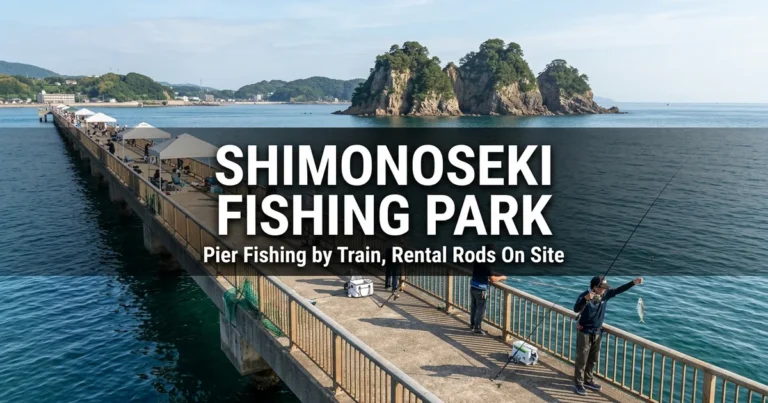
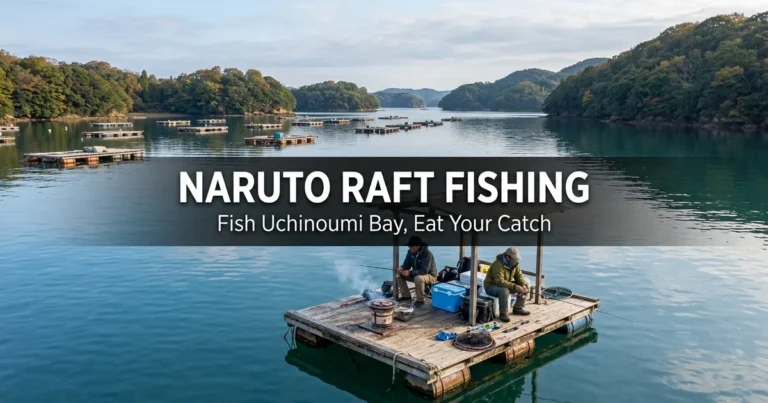
Start near Osaka with our Osaka Bay fishing guide. Totto Park Kojima is a fishing park with platforms. Awakan on Awaji Island lets you fish from your hotel. The Naruto raft fishing guide covers the raft in Naruto’s Uchinoumi, and the Shimonoseki fishing park guide covers a park in Shimonoseki.
Source: hama-angler (hama-angler.com), checked October 2026.
Shore or Boat?
From shore
FISH OUT lists sabiki for horse mackerel, short casts for sillago and goby, and egi for bigfin reef squid. All of them are on its shore list, which covers seawalls, river mouths and rocks.
By boat
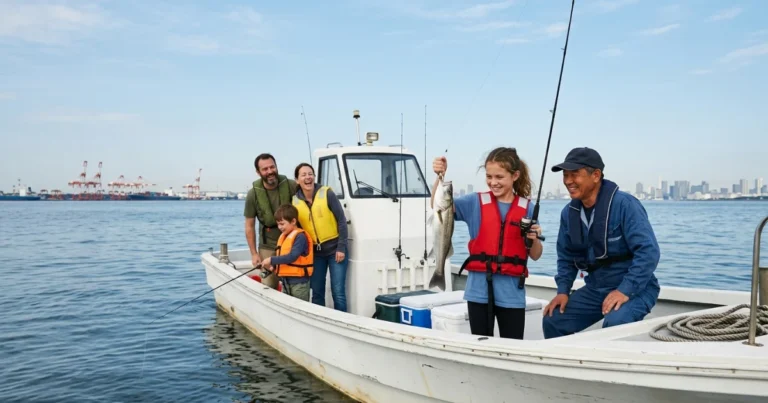
FISH OUT lists tai-rubber jigs for red seabream, tenya rigs for hairtail and jigging for fast fish like yellowtail.
Shore or boat for my first trip?
If you’re new, we’d pick shore. Hama-angler picks sabiki horse mackerel for beginners at Takamatsu, and that needs no boat. If you want red seabream, we’d pick a boat, which FISH OUT marks as peak in May, October and November.
As of October 2026, we found no Seto Inland Sea fishing boat on Klook or KKday. FISH OUT’s boat calendar covers local charter boats, but we didn’t check how they take bookings, so ask each boat about language, payment and gear before you plan around one.
Fishing from your hotel
If you’d rather skip charter booking, we’d pick Awakan on Awaji Island. It’s an inn with its own fishing area for guests, and you can book it on Klook or KKday. Our Awakan guide covers the fishing, the cooking service and the boat trip the hotel runs.
Prices and available dates vary. Check the booking page before you book.
Getting Around
Pick your landing airport by where you want to fish. Kansai, Hiroshima, Okayama and Matsuyama airports all serve the area.
If you plan to hop between prefectures by train, look at the JR Sanyo-San’in Area Pass (7 days). Klook’s listing says it covers the Kansai area and the Sanyo Shinkansen from Shin-Osaka to Hakata, among other lines. Check the full coverage on Klook before you buy.
Prices and available dates vary. Check the booking page before you book.
Before You Go
- License and local rules. Read our fishing license guide before you book anything. It’s also where local rules are collected.
- Rods. Our guide on how to bring fishing rods to Japan covers packing and getting from the airport to your spot.
- Data. Set up the best eSIM for fishing in Japan before you leave, so maps and translation apps work when you reach an island port.
FAQ
QWhen is the best time to fish the Seto Inland Sea?
Autumn. Hama-angler calls it the peak for variety, and FISH OUT calls October the strongest month of the season. If you want one fish, check the calendar above.
QCan a beginner fish from shore?
Yes. Hama-angler suggests sabiki horse mackerel at Takamatsu for beginners, and FISH OUT marks horse mackerel as peak from September to November.
QDo I need a fishing license?
No. Japan’s Fisheries Agency says foreign visitors can fish with a rod from shore and from boats under 3 tons. Boats of 3 tons or more are allowed only when a Japanese vessel runs them under the control of a Japanese fisher. A fishing charter is an example. Rivers and lakes are different. They can need a ticket from the local fishing cooperative. The agency asks you to check with local government or fishing operators first, so see our fishing license guide.
QCan I book a Seto Inland Sea fishing boat on Klook or KKday?
Not yet. As of October 2026, we found none. Awakan on Awaji Island is the bookable fishing stay we cover.
QCan I fish without my own gear?
It depends on the place. This guide doesn’t cover rental gear. Our Osaka Bay fishing guide and Totto Park Kojima guide cover fishing parks near Osaka, so check each guide for what you can rent.
Ready to Book?
Time to reel in a plan. Pick your season from the calendar, pick your prefecture, then choose how you’ll get there. If you’d like to fish from your hotel, Awakan is the bookable place to start.